Coast to Coast in 1927 Took Six Weeks. Now It Takes Six Days — or Six Hours.
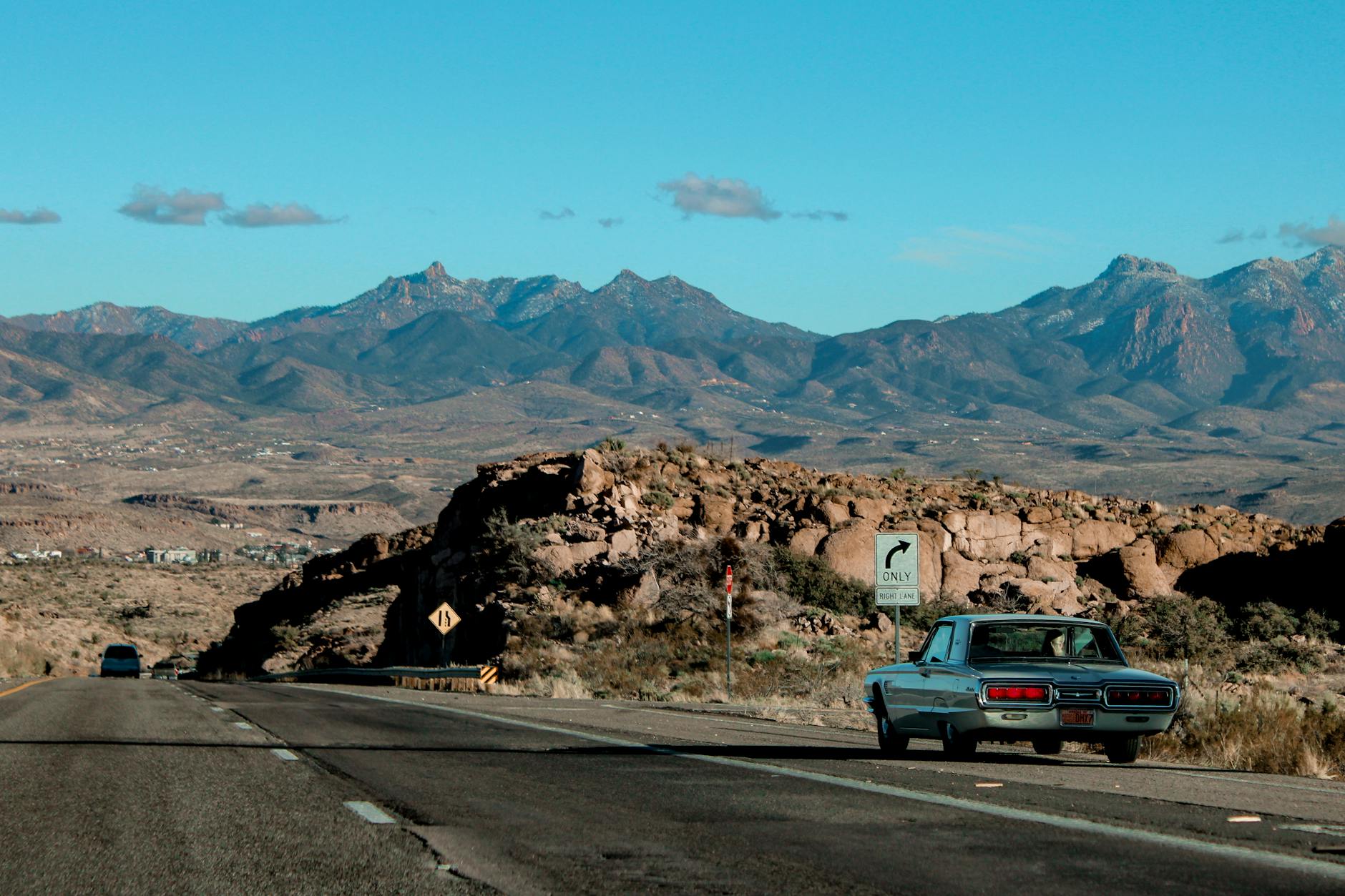
Coast to Coast in 1927 Took Six Weeks. Now It Takes Six Days — or Six Hours.
There's something almost spiritual about the American road trip. The open road, the changing landscapes, the sense that you could just point the car west and go. It's been romanticized in novels, songs, and films for over a century. Jack Kerouac made it a literary movement. John Steinbeck made it a metaphor for the American soul.
But here's what those stories tend to leave out: for most of American history, a cross-country drive wasn't a romantic adventure. It was an exhausting, expensive, frequently dangerous slog through inadequate roads, unreliable vehicles, and vast stretches of country with almost nothing in between.
The romance was real. The infrastructure, for a very long time, was not.
What Driving Across America Actually Looked Like in the 1920s
In 1927, if you decided to drive from New York to Los Angeles, you were looking at somewhere between five and eight weeks — assuming you made it at all. The Lincoln Highway, one of the first transcontinental routes, had been established in 1913, but "established" is a generous word. Large sections were unpaved dirt tracks that turned to impassable mud in rain and choking dust in dry weather. There were no consistent road markings. Navigation meant carrying paper maps of wildly varying accuracy and stopping to ask locals for directions — locals who sometimes pointed you the wrong way because they'd never been more than thirty miles from home.
Breakdowns were not the exception. They were the plan. Drivers carried spare parts, tools, and sometimes enough supplies to camp for days while waiting for help. Tires failed constantly on rough surfaces. Getting stuck in sand, mud, or a dry creek bed was a normal part of the journey. Some stretches through the Nevada desert or the Great Plains had no towns, no gas stations, and no water for over a hundred miles. People died attempting this drive. Not often, but enough that it was a real consideration.
The cost was staggering relative to average incomes, and only the adventurous, the wealthy, or the genuinely desperate made the attempt. Early cross-country drivers often documented their trips like expeditions — because that's essentially what they were.
The 1950s: Better, But Still Not Easy
By the 1950s, things had improved — but not as much as you might expect. U.S. Route 66, the most famous road in American history, connected Chicago to Santa Monica and had been paved throughout by 1938. Gas stations, motels, and roadside diners had begun to fill in the gaps. A cross-country drive was no longer an expedition requiring survival skills. But it was still a commitment.
A typical coast-to-coast drive in 1955 took around two weeks if you pushed hard. The roads were two-lane for most of the journey, running directly through every small town along the way — with traffic lights, speed limits, and the general pace of small-town life interrupting your progress every few miles. You didn't bypass Amarillo or Albuquerque. You drove through the middle of them.
And then there was the car itself. Vehicles of the era required significantly more maintenance than modern ones. Oil checks were a daily ritual. Overheating in summer was common. Air conditioning in cars was a luxury feature that most people didn't have. A summer drive through the Mojave Desert in a 1955 Chevy with the windows down was an exercise in endurance.
What Changed Everything: The Interstate Highway System
In 1956, President Eisenhower signed the Federal Aid Highway Act, authorizing the construction of what would become the Interstate Highway System — 41,000 miles of high-speed, limited-access roads connecting the entire country. It was, at the time, the largest public works project in American history, and its effects on everyday life were profound in ways most people never think about.
The interstates bypassed towns rather than running through them. They were engineered for sustained high speeds, with gentle curves, consistent grades, and wide lanes. They eliminated railroad crossings, traffic signals, and the stop-start rhythm of the old federal highways. And crucially, they were built to a national standard — so a driver in Maine and a driver in California were navigating roads designed according to the same specifications.
By the time the system was largely complete in the 1970s and 1980s, a coast-to-coast drive had been compressed to roughly four to five days of serious driving — or six to seven at a comfortable pace. Today, Google Maps will cheerfully tell you that New York to Los Angeles is 40 hours and 27 minutes of drive time. People do it in four days without breaking a sweat.
And if you'd rather not drive at all, a coast-to-coast flight takes about five and a half hours and costs, in inflation-adjusted terms, a fraction of what the 1927 road trip cost in time, fuel, and mechanical repairs.
The Invisible Infrastructure Behind the Romance
The next time you pull onto an on-ramp, set your cruise control, and watch the miles dissolve behind you, consider what's actually making that possible. The road itself — engineered, maintained, and signed. The rest stops every fifty miles. The GPS navigation that means you will never, not once, be genuinely lost. The fuel-injected engine that will almost certainly not break down in the middle of Nevada. The air conditioning keeping you at a comfortable 72 degrees while the desert outside hits 110.
None of that existed for most of the history of the American road trip. The freedom of the open road has always been real. But the ease of it? That's a very recent invention — and one we almost never stop to appreciate.