Long Distance Used to Cost a Fortune. Now You Can Video Call Tokyo for Free.
Long Distance Used to Cost a Fortune. Now You Can Video Call Tokyo for Free.
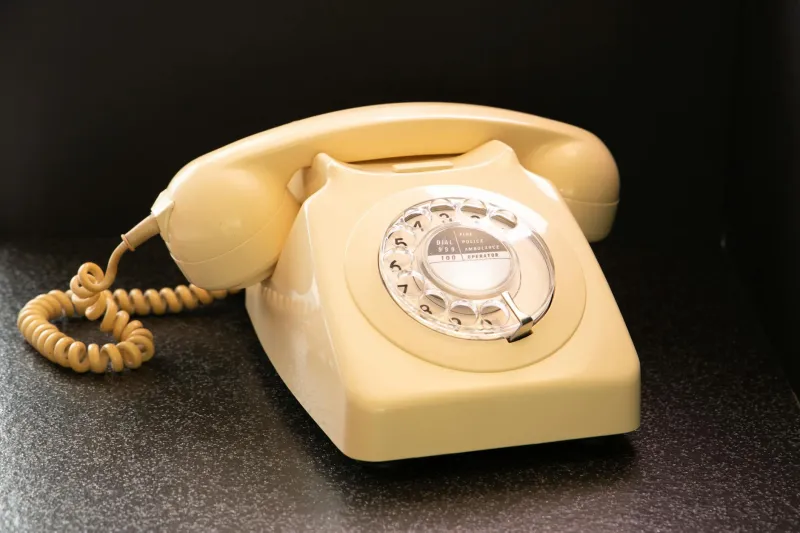
There's a scene that played out in millions of American homes throughout the 1960s and 70s: the Sunday phone call. Mom would dial a relative in another state, the whole family would crowd around the receiver to say their hellos, and the conversation would wrap up in under ten minutes — not because there was nothing left to say, but because the meter was running. Long-distance calls were billed by the minute, and those minutes added up fast.
This wasn't paranoia. It was rational behavior in a world where telephoning someone across state lines was a genuine financial decision.
The Price of Staying Connected
To understand how expensive phone calls used to be, you have to understand the structure of the industry that produced them. For most of the 20th century, AT&T — known as the Bell System — held a federally sanctioned monopoly over American telephone service. There was no competition. There were no alternatives. If you wanted to make a call, you used AT&T, and you paid whatever AT&T charged.
And what AT&T charged for long distance was, by any modern standard, extraordinary. In the early 1970s, a three-minute call from New York to Los Angeles during peak hours cost somewhere around $1.50 — which doesn't sound catastrophic until you adjust for inflation. In today's dollars, that three-minute conversation cost the equivalent of roughly $11. Call for half an hour and you'd spent the equivalent of $110 before you'd finished catching up.
International calls were in a different category altogether. Calling a relative in Europe in 1975 could cost $10 to $15 per minute in today's money. Calling Asia was even more expensive. These weren't calls people made casually. They were calls people made when someone was sick, or dying, or when there was news so significant it justified the expense. Immigrants who came to America in that era often went years without hearing a family member's voice — not because they didn't care, but because they literally couldn't afford to call.
Even domestic calls required strategy. Phone companies offered reduced rates during evenings and weekends, which is why Sunday afternoons became the unofficial national calling hour. Families timed their conversations. Some people wrote out what they wanted to say in advance so they wouldn't ramble and waste money. The three-minute long-distance call was practically its own cultural format.
The Breakup That Changed Everything
The first major crack in the wall came in 1984, when a federal antitrust ruling broke up the Bell System into AT&T and seven regional companies — the so-called Baby Bells. For the first time, competition entered the long-distance market. MCI and Sprint went after AT&T's customers aggressively, and prices began to fall.
They fell slowly at first, then faster. By the early 1990s, long-distance rates had dropped significantly from their peak. By the late 1990s, as the internet began reshaping communication, the entire concept of paying per minute for a domestic call started to feel archaic. Flat-rate unlimited long-distance plans arrived, and suddenly the Sunday call could last as long as anyone wanted.
But the real revolution didn't come from the phone companies at all. It came from software engineers building tools on top of the internet — tools that turned voice and video communication into something that cost essentially nothing to transmit.
From Expensive to Essentially Free
Skype launched in 2003 and offered something that would have seemed like science fiction to someone living in 1975: free voice calls over the internet, from anywhere to anywhere, at any length. It wasn't perfect. The audio quality was sometimes rough. But the price was zero, and that changed everything.
What followed was a cascade. FaceTime. WhatsApp. Zoom. Google Meet. Facebook Messenger. Each of these platforms offered free or near-free voice and video calling to anyone with an internet connection, anywhere on earth. Today, a grandmother in rural Ohio can video call her granddaughter studying in Seoul, see her face in real time, and talk for two hours — for free. The call costs nothing. The technology is better than anything the phone companies were selling for premium prices in 1990.
For anyone who grew up after the smartphone era, this is simply how the world works. But for anyone who remembers timing their long-distance calls and watching the clock, it still carries a faint sense of the miraculous.
What a Dollar Buys Now vs. Then
Here's a way to feel the scale of the change: in 1970, AT&T's long-distance revenue was enormous — the company was one of the most valuable in the world, built almost entirely on the simple act of connecting voices across distances. That revenue existed because there was no alternative. Customers paid because they had to.
Today, that entire business model has effectively ceased to exist. The average American pays somewhere between $0 and a few cents per minute for domestic calls, depending on their plan — and most unlimited plans make the per-minute cost functionally zero. International calls through traditional carriers still carry some cost, but app-based calling has made even that largely irrelevant for most people.
The shift isn't just about price. It's about access. Communication across distance used to be a privilege that wealthier families exercised more freely than poorer ones. The immigrant worker who couldn't afford to call home. The college student who rationed their calls to once a week. The grandparent who got one Sunday call a month. All of those constraints were real, and they shaped relationships and family life in ways that are easy to forget now that the constraints have vanished.
The World That Replaced It
Something interesting happened when communication became free: people started using it constantly. The average American sends dozens of texts a day, makes multiple calls, shares photos, leaves voice messages, and participates in group chats with people spread across the country and the world. None of this costs anything meaningful.
It's easy to take for granted. But the next time you tap a contact and watch their face appear on your screen from 3,000 miles away, it's worth pausing for a second. Fifty years ago, that connection would have cost a week's groceries. Today it costs nothing at all. That's a change so complete it's almost hard to see — which is usually the sign that something has truly, permanently shifted.