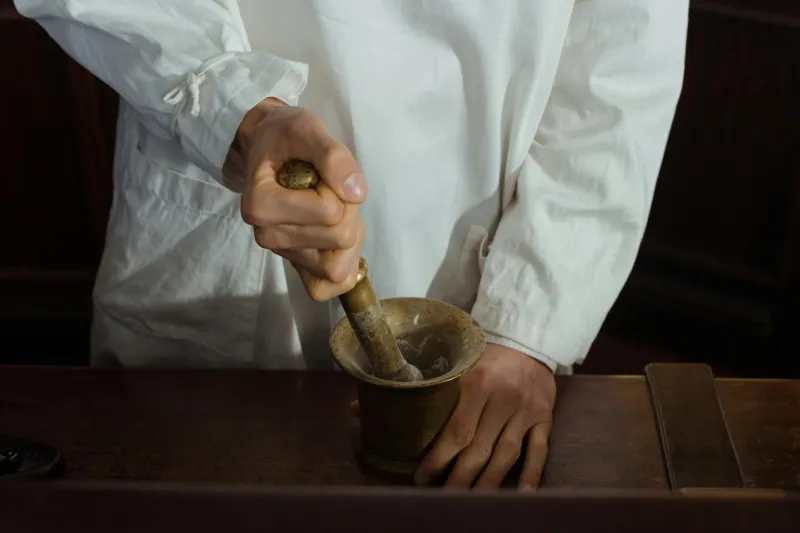
The Mortar and Pestle Era
Walk into Rexall or your local independent pharmacy in 1955, and you'd find something that seems almost magical by today's standards: a pharmacist who actually knew chemistry. Behind that high counter, wearing a crisp white coat, stood someone who could compound medications from scratch, adjust dosages based on your specific needs, and remember that you were allergic to penicillin without consulting a computer screen.
These weren't just pill-dispensing clerks. They were neighborhood chemists who ground powders, mixed solutions, and created custom formulations right there in the store. Need a special strength ointment for your child's eczema? No problem—they'd whip it up while you waited, adjusting the concentration based on what worked best for your family.
When Your Pharmacist Was Your Health Advisor
Back then, Americans didn't have WebMD or urgent care clinics on every corner. Instead, they had Harold at the corner drugstore, who'd been filling prescriptions for the neighborhood for twenty years. He knew that Mrs. Patterson's arthritis flared up in winter, that young Tommy couldn't swallow pills yet and needed liquid formulations, and that old Mr. Chen preferred his blood pressure medication taken with food.
This wasn't just friendly service—it was genuine medical oversight. Pharmacists caught dangerous drug interactions by memory, not computer alerts. They'd call your doctor if something seemed off about a prescription, and they'd counsel you on side effects, timing, and proper storage with the kind of detailed knowledge that came from years of hands-on experience.
The Assembly Line Revolution
Today's pharmacy operates like a well-oiled machine, and that's both its strength and its weakness. Walk into any CVS or Walgreens, and you'll witness an impressive display of automation. Robots count pills with perfect accuracy, computer systems flag interactions instantly, and prescription bottles move through the process at lightning speed.
The numbers tell the story: modern pharmacies process hundreds of prescriptions daily, compared to the dozens handled by those old-school druggists. Insurance networks demand this efficiency, and patients have come to expect their medications ready in minutes, not hours.
What We Gained in Speed
There's no denying the benefits of this transformation. Today's automated systems catch medication errors that human pharmacists might miss. Computer databases track drug interactions across multiple medications in ways that even the most experienced pharmacist couldn't match. And the convenience factor is undeniable—you can transfer prescriptions with a phone call, get refills through apps, and even have medications delivered to your door.
Modern pharmacies also offer services that would have seemed impossible in the 1950s: flu shots, health screenings, and even basic medical consultations. Some chains now provide clinic services right in the store, creating one-stop healthcare destinations.
The Personal Touch That Disappeared
But something fundamental was lost in this efficiency revolution. Today's pharmacist might be highly trained and knowledgeable, but they're serving hundreds of customers they've never met before and may never see again. The deep, personal relationships that once characterized pharmacy care have been replaced by brief, transactional interactions.
When your prescription is ready, you get a text message instead of a conversation. Questions about side effects are answered by reading from computer printouts rather than drawing from personal experience with your medical history. The pharmacist who once served as a bridge between you and your doctor has become more of a final checkpoint in an increasingly automated process.
The Hidden Cost of Convenience
This shift reflects a broader change in American healthcare: the prioritization of efficiency over relationship, speed over depth. While we can now fill prescriptions faster than ever before, studies suggest that patients who have consistent relationships with their pharmacists have better medication adherence and fewer adverse drug events.
The old-school pharmacist who knew your family's medical quirks could spot problems before they became serious. They'd notice if you stopped picking up your heart medication or if you seemed confused about dosing instructions. Today's system, for all its technological sophistication, often misses these human elements of care.
A Remarkably Changed Profession
The transformation of American pharmacy represents one of healthcare's most dramatic shifts—from artisanal craft to industrial process. We've traded the pharmacist who mixed your cough syrup by hand for the efficiency of mass-produced medications and drive-through convenience.
For most Americans, this trade-off has been worth it. Medications are safer, more consistent, and more accessible than ever before. But occasionally, when you're standing in line at the pharmacy counter, rushing through a transaction with someone who doesn't know your name, you might wonder what it would have been like to have Harold behind that counter—the guy who remembered not just your prescription, but your story.