From Coke Bottles to Cool Kids
The thick, heavy glasses that once branded American children as "nerds" have virtually vanished from playgrounds. Those chunky frames that magnified eyes and slipped down noses—the ones that guaranteed social exile in 1970s schoolyards—have been replaced by sleek designer eyewear that kids actually want to wear.
Today's glasses are fashion statements. Celebrities sport frames without lenses on red carpets. Instagram influencers coordinate their eyewear with their outfits. What was once a mark of shame has become a symbol of sophistication.
But behind this cultural transformation lies a troubling paradox: just as glasses became fashionable, American children started needing them more than ever. The same generation that turned eyewear into accessories is experiencing vision problems at rates that would have shocked their grandparents.
When Clear Vision Was the Norm
In 1950, only about 20% of Americans were nearsighted. Thick glasses were rare enough to be remarkable—and remarkably stigmatized. Children who wore them endured nicknames like "four-eyes" and "Coke bottles." The heavy lenses required to correct severe nearsightedness created the magnified-eye effect that made wearers look different, vulnerable, bookish.
Those glasses weren't just socially challenging—they were physically uncomfortable. The thick glass lenses were heavy, the frames were basic, and the technology was limited. Many children avoided wearing their glasses whenever possible, preferring to squint through blurry vision rather than face social consequences.
Most American children simply didn't need glasses. They could see the blackboard clearly, catch fly balls without difficulty, and navigate their world with sharp vision. Nearsightedness was often considered a mark of excessive reading or studying—hence the "bookworm" stereotype.
The Great Vision Decline
Something dramatic happened to American eyesight over the past seven decades. Today, approximately 42% of Americans are nearsighted—more than double the rate from the 1950s. Among young adults, the numbers are even more alarming, with some studies showing myopia rates approaching 60%.
The change has been particularly striking among children. Pediatric optometrists report seeing nearsightedness develop in children as young as six or seven, ages when clear distance vision was once virtually guaranteed. What was once considered an adult condition increasingly affects elementary school students.
The global picture is even more startling. In parts of Asia, myopia rates among young adults exceed 80%. Researchers project that by 2050, roughly half the world's population will be nearsighted—a condition that was relatively rare just a century ago.
The Fashion Revolution
While American vision deteriorated, glasses underwent a complete cultural makeover. The transformation began in the 1980s when contact lenses became widely available and affordable. Suddenly, people had choices. Glasses were no longer a permanent fixture but an optional accessory.
The technology improved dramatically. Lightweight plastic lenses replaced heavy glass. Anti-reflective coatings eliminated glare. High-index materials made strong prescriptions nearly invisible. The thick "Coke bottle" glasses that once defined severe nearsightedness became technologically obsolete.
Designer frames entered the market, turning eyewear into fashion. Celebrities began wearing glasses as style statements rather than vision corrections. The "nerd chic" aesthetic emerged, making intellectual appearance desirable rather than stigmatizing.
By the 2000s, the cultural flip was complete. Children who needed glasses could choose from hundreds of stylish options. Parents spent more on kids' frames than previous generations spent on entire wardrobes. Glasses became cool—just as more children needed them.
The Screen Generation's Burden
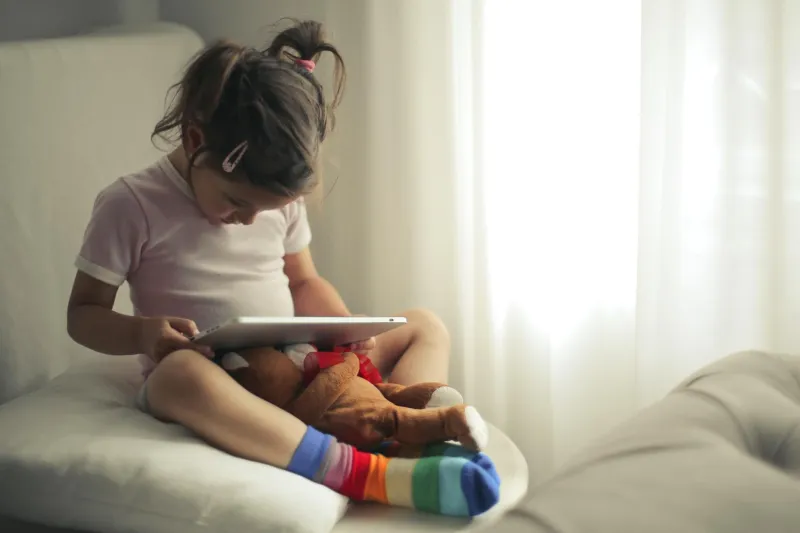
The timing isn't coincidental. The rise in childhood myopia parallels the digital revolution that reshaped American childhood. Children who once spent hours outdoors now spend comparable time staring at screens—phones, tablets, computers, televisions.
Research suggests that prolonged close-up focus, particularly on digital devices, may contribute to myopia development. The eye muscles that control focusing can become strained from constant near-work, potentially triggering the elongation of the eyeball that causes nearsightedness.
But screens aren't the only factor. Modern American children spend significantly less time outdoors than previous generations. Natural light exposure appears to protect against myopia development, possibly by regulating chemicals that control eye growth. The children who once played outside until dark now often retreat indoors after school.
The combination is particularly problematic: more close-up work, less outdoor time, and environmental factors that previous generations never encountered.
The Hidden Costs of Fashionable Vision
While glasses became socially acceptable, the health implications of widespread myopia have grown more serious. Nearsightedness isn't just an inconvenience—it's a risk factor for more severe eye conditions later in life.
High myopia increases the likelihood of retinal detachment, glaucoma, and early cataracts. The generation that's developing nearsightedness in childhood may face significant eye health challenges as they age. What seems like a minor vision correction today could become a major medical concern decades from now.
The economic impact is substantial too. Americans now spend billions annually on vision correction—glasses, contacts, eye exams, and surgical procedures. The contact lens industry alone generates over $3 billion in annual revenue, largely from people who developed myopia in childhood.
The Laser Surgery Escape Hatch
The rise of LASIK and other refractive surgeries has provided another cultural shift. Many Americans now view glasses and contacts as temporary inconveniences before eventual surgical correction. The procedure that was experimental in the 1990s has become routine, with millions of Americans reshaping their corneas to achieve clear vision.
This technological solution has further changed how Americans think about vision problems. Myopia is no longer seen as a permanent condition but as a correctable inconvenience. The long-term eye health risks of nearsightedness often get overlooked in favor of immediate vision solutions.
What We Lost in Plain Sight
The transformation of American vision represents a broader pattern: we've become remarkably good at treating problems while losing sight of prevention. Modern glasses are more comfortable and fashionable than ever, but more children need them. Laser surgery can eliminate the inconvenience of poor vision, but it doesn't address the underlying eye changes that caused the problem.
Previous generations of American children developed strong distance vision through outdoor play, varied visual activities, and limited close-up work. They didn't need designer frames because they rarely needed frames at all.
Today's children grow up in environments that seem designed to damage their eyesight: indoor lighting, constant screen time, limited outdoor exposure, and prolonged focus on near objects. We've created solutions for the vision problems we've caused, but we haven't addressed why those problems developed in the first place.
The thick glasses that once marked children as different have been replaced by stylish frames that make vision correction fashionable. But behind the improved aesthetics lies a troubling reality: we've traded clear natural vision for designer solutions to problems that didn't exist when American children spent their days under open skies instead of fluorescent lights.
The real question isn't how to make glasses more appealing—it's whether we can create childhoods that don't require them.