When Americans Sealed Every Deal with a Grip: The Death of Our Most Sacred Gesture
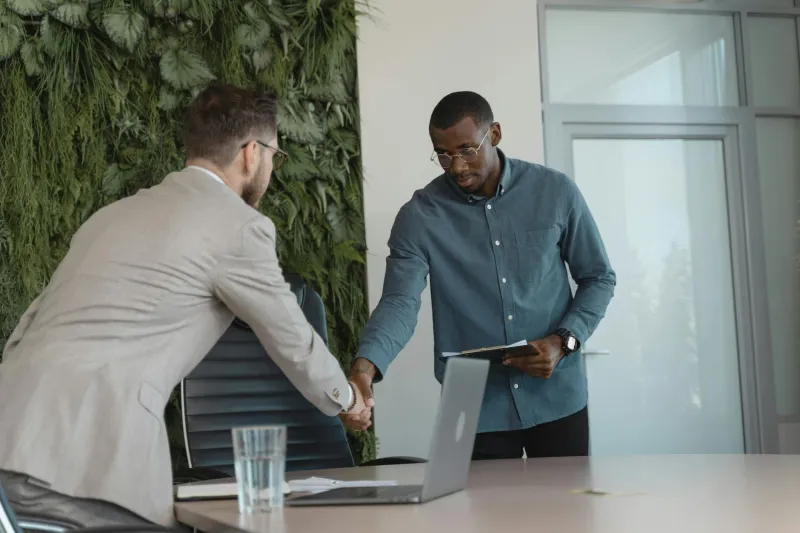
When Americans Sealed Every Deal with a Grip: The Death of Our Most Sacred Gesture
Walk into any American office building in 1985, and you'd witness a ritual as predictable as the sunrise. Elevator doors would open, hands would extend, palms would meet with measured pressure, and business would begin. The handshake wasn't just a greeting—it was a social GPS that told you everything you needed to know about someone in three seconds flat.
Today, that same elevator ride feels like navigating a minefield of social anxiety. Do you extend your hand? Offer a wave? Go for the awkward elbow bump? Most people just stare at their phones, avoiding the entire dilemma altogether.
The Golden Age of the Grip
For most of American history, your handshake was your signature. A firm grip with direct eye contact could land you a job, close a million-dollar deal, or welcome a stranger into your community. Politicians built entire careers on their ability to work a rope line, and business schools actually taught proper handshaking technique alongside accounting and marketing.
The numbers tell the story: in 1990, the average American office worker shook hands approximately 15-20 times per day. Sales professionals might double that number. It was so ingrained in our culture that we had an entire vocabulary around it—"let's shake on it," "his word and his handshake," "a gentleman's agreement sealed with a grip."
Real estate agents knew that the first handshake often determined whether they'd make the sale. Job interviews began and ended with handshakes that hiring managers would analyze like tea leaves. Even children were coached on proper technique, with parents correcting limp grips and teaching the importance of looking adults in the eye while shaking hands.
The Slow Retreat Begins
The decline didn't happen overnight. It started subtly in the early 2000s, as younger generations began favoring fist bumps and casual waves in informal settings. Tech culture, with its emphasis on digital interaction over physical presence, began normalizing distance even in face-to-face encounters.
Then came the hygiene revolution. The rise of hand sanitizer culture in the 2000s and 2010s made Americans increasingly aware of germs and transmission. Suddenly, that conference room handshake felt less like a trust-building exercise and more like a bacterial exchange program.
Workplace harassment awareness also played a role. As companies implemented strict policies about physical contact, many professionals began defaulting to verbal greetings to avoid any possibility of misinterpretation. The handshake, once universal, became another potential liability in an increasingly cautious world.
The Pandemic Knockout Punch
COVID-19 didn't just pause the handshake—it delivered what might be the final blow to America's most enduring social ritual. For two years, extending your hand to a stranger wasn't just rude; it was potentially dangerous. An entire generation of teenagers and young adults spent their formative years being told that physical greetings were literally toxic.
The statistics are staggering: surveys from 2023 show that 73% of Americans under 25 report feeling uncomfortable with handshakes, even in professional settings. Many have never learned proper technique, leading to the awkward, limp grips that older generations find so off-putting.
What We've Lost in Translation
The collapse of handshake culture represents more than just changing etiquette—it's a fundamental shift in how Americans build trust and assess character. Research from the University of Chicago found that people who engage in handshakes before negotiations are more likely to reach mutually beneficial agreements. The physical contact literally creates a chemical bond through the release of oxytocin, the same hormone that bonds parents to children.
Without this tactile connection, we're relying more heavily on digital communication and visual cues to assess trustworthiness. But screens can't convey the subtle information embedded in a handshake—the confidence of the grip, the steadiness of the hand, the willingness to make physical contact with a stranger.
Sales professionals report that building rapport takes significantly longer now. Job interviews feel more distant and formal. Even dating has been affected, with many young Americans reporting anxiety about when and how to initiate any physical contact, having missed the training wheels that handshakes once provided.
The Ripple Effects
The handshake's decline reflects broader changes in American social fabric. We're becoming a more isolated, touch-averse society, where physical distance is increasingly the default. This shift coincides with rising rates of loneliness, social anxiety, and difficulty forming meaningful connections—problems that disproportionately affect younger generations.
Some companies are fighting back, implementing "handshake training" for new employees and encouraging physical greetings in appropriate professional contexts. But they're swimming against a cultural tide that seems determined to digitize even our most basic human interactions.
Looking Forward
The American handshake may never fully recover its former status as the universal greeting. But its decline serves as a reminder of how quickly fundamental social norms can shift, and how those changes ripple through every aspect of our culture.
As we navigate this new landscape of social interaction, we might ask ourselves: what are we gaining from our increased physical distance, and what essential human connections are we losing along the way? The answer might be written in the limp, uncertain grips of a generation that never learned the language their grandparents spoke fluently.