Before Novocaine, Your Barber Was Your Dentist — And That Was Terrifying
Before Novocaine, Your Barber Was Your Dentist — And That Was Terrifying
Imagine walking into your local barbershop not for a trim, but to have a rotting tooth yanked from your skull. No anesthesia. No sterile instruments. Just a strong grip, rusty pliers, and the hope you wouldn't die from infection afterward.
This wasn't some medieval nightmare — this was American dentistry well into the 1800s. The red-and-white striped barber pole that still spins outside shops today? Those stripes originally represented blood and bandages, advertising the barber-surgeon's dual services: haircuts and tooth extractions.
When Toothaches Could Kill You
In 1840s America, a simple cavity carried genuine life-or-death stakes. Dental infections regularly killed people — including several U.S. presidents who suffered from severe dental problems. George Washington's famous wooden teeth were actually a desperate attempt to replace teeth lost to extraction and decay.
The "dentist" of the era was typically the town barber, blacksmith, or traveling showman. They operated with tools borrowed from other trades: pliers from the toolshed, files from metalwork, and whatever alcohol was handy to "sterilize" both patient and instruments.
Procedures happened in public squares during market days, with crowds gathering to watch the spectacle. Patients were held down by multiple people while the "dentist" worked. Many chose to live with excruciating pain rather than face the extraction table.
The Revolution That Changed Everything
The transformation began in 1846 when Dr. William Morton first used ether for tooth extraction in Boston. For the first time in human history, dental work could happen without conscious suffering. But this breakthrough took decades to spread beyond major cities.
The real game-changer came in 1905 with procaine — better known as novocaine. This local anesthetic meant patients could remain awake and alert while feeling no pain. Suddenly, the dentist's chair transformed from a torture device into a place of relief.
Meanwhile, other innovations quietly revolutionized the field. The dental drill, invented in 1875, replaced crude filing and chiseling. X-rays, discovered in 1895, let dentists see problems before they became emergencies. Sterilization techniques borrowed from surgical advances made infections increasingly rare.
The Fluoride Game-Changer
Perhaps the most remarkable change happened after World War II with water fluoridation. In 1945, Grand Rapids, Michigan became the first city to add fluoride to its water supply. The results were stunning — childhood tooth decay dropped by more than 60% within a decade.
This public health measure, now reaching 75% of Americans, prevented more dental suffering than all previous advances combined. An entire generation grew up never experiencing the tooth decay that had plagued their grandparents.
From Terror to Tuesday Afternoon
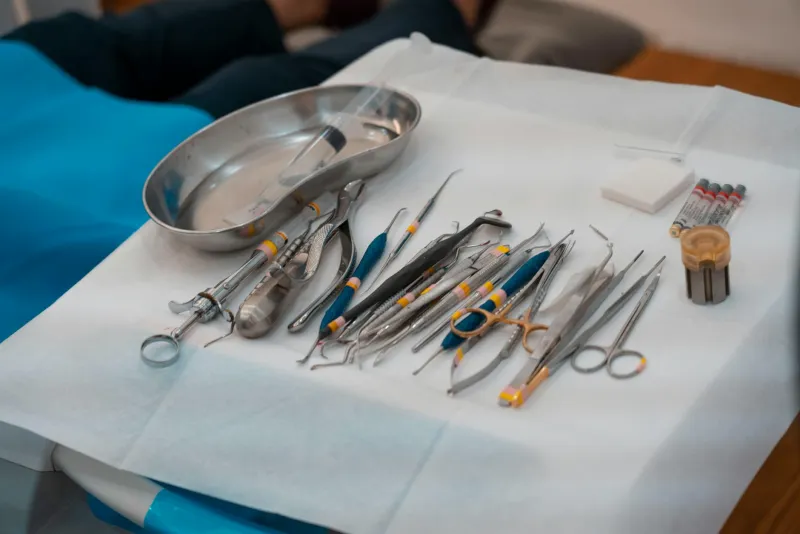
Today's dental experience would seem miraculous to someone from 1850. You schedule online, arrive at a climate-controlled office with soft music and flat-screen TVs. The dentist reviews digital X-rays, administers targeted anesthesia, and uses precision instruments that would make a Swiss watchmaker jealous.
Modern dental anxiety — real as it is for many people — pales beside the genuine terror our ancestors faced. They knew that addressing dental problems meant choosing between unbearable pain and potentially deadly procedures.
The average American today visits the dentist twice yearly for routine cleanings that prevent most serious problems. We complain about the inconvenience of a filling, while our great-great-grandparents would have considered such minor intervention a miracle.
The Numbers Tell the Story
The statistics reveal the magnitude of change. In 1900, the average American had lost most of their teeth by age 50. Today, people routinely keep their natural teeth into their 80s and beyond.
Dental-related deaths, once common enough to be unremarkable, now make headlines precisely because they're so rare. What killed thousands annually in the 1800s barely registers in modern mortality statistics.
Even cosmetic improvements that seemed impossible became routine. Braces, invented in the early 1900s but refined over decades, transformed millions of smiles. Teeth whitening, crowns, and implants turned dental visits from emergency interventions into lifestyle choices.
The Quiet Revolution
Unlike dramatic medical breakthroughs that make headlines, dentistry's transformation happened gradually, almost invisibly. Each generation experienced slightly better care than the last, until the cumulative change became revolutionary.
Your dentist today represents the endpoint of centuries of innovation — from the barber's bloody pliers to precision instruments guided by digital imaging. The sterile environment, effective anesthesia, and preventive approach would seem like science fiction to someone from just 150 years ago.
Next time you settle into that cushioned dental chair, consider this: you're experiencing what countless generations could only dream of — dental care without fear, pain, or life-threatening risk. The barber pole still spins, but thankfully, it's just advertising haircuts now.