Eight Families, One Phone Line, Zero Privacy: The Shared Connection America Forgot It Had
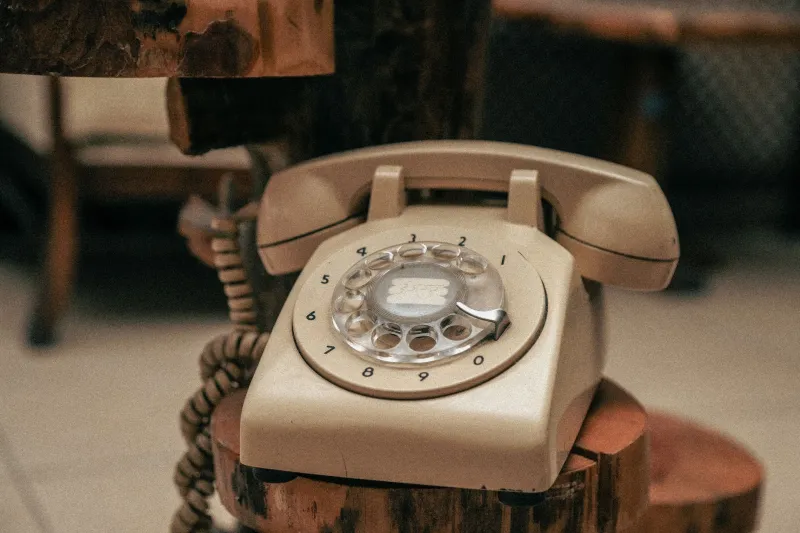
Sometime in the early 1950s, a woman in rural Indiana picked up her telephone receiver to call her sister and heard, instead, the unmistakable voice of the woman three farms over, deep in conversation about whether her husband had been drinking again. The polite thing to do was to quietly hang up and wait. The human thing to do — and this is the part that made party lines legendary — was sometimes to listen just a little longer.
This was the party line, and for a significant portion of American households well into the 1970s, it was simply how the telephone worked.
How It Actually Functioned
A party line wasn't a conference call or a chat room. It was a shared physical circuit — a single telephone line that connected multiple households, typically two to eight, depending on the exchange and the era. Each household had its own distinct ring pattern: two shorts and a long might be yours, one long and one short might be your neighbor's. You learned to recognize which ring was meant for you, and you were supposed to ignore the others.
Supposed to.
The telephone companies were fairly explicit in their guidance: you did not pick up during someone else's ring, you did not linger on the line once you realized it was occupied, and you absolutely did not repeat what you happened to overhear. These rules existed because everyone understood that without them, the system would become socially unworkable. The technology itself made eavesdropping effortless. Courtesy was the only firewall available.
In practice, the system produced something that no telecom engineer had designed and no modern platform has managed to replicate: an accidental community radio, broadcasting the texture of neighborhood life to anyone curious enough to quietly lift a receiver.
The Geography of It
Party lines weren't equally distributed across American life. Urban areas in major cities moved to private lines relatively quickly as telephone infrastructure expanded after World War II. It was rural America that lived with shared lines the longest — in some areas, well into the 1980s. Small towns in the Midwest, farming communities in the South, mountain communities in Appalachia: these were the places where party line culture ran deepest and lasted longest.
For people in those communities, the party line was genuinely woven into social life in ways that went beyond the inconvenient. Neighbors coordinated through it. Emergency information traveled across it before anyone thought to call an official number. A woman who heard distress in a neighbor's voice through an accidental overlap might walk over to check in. The line was infrastructure, but it was also, in a strange way, a kind of neighborhood nervous system.
Communities that had lived in relative isolation found that the party line, for all its indignities, created a connective tissue that private lines would later dissolve.
The Etiquette Wars
If you want to understand what the party line era felt like from the inside, read the letters to the editor sections of small-town newspapers from the 1940s through the 1960s. The complaints are remarkably consistent: someone was tying up the line for too long. Someone's teenage daughter was monopolizing the circuit every evening. Someone was definitely listening in and definitely repeating what they heard.
The telephone company fielded endless complaints about party line abuse. Operators — who in smaller exchanges often knew their customers personally — sometimes mediated disputes. There were households that developed elaborate signaling systems to indicate they needed the line urgently. There were feuds that lasted years, rooted in something overheard during someone else's ring.
And there were, inevitably, friendships that formed the same way. Two women who had never properly introduced themselves discovering, through years of accidental proximity on a shared circuit, that they had an enormous amount in common.
The Swing to Sealed-Off
Private residential lines became standard across most of the United States by the late 1970s and early 1980s. The party line retreated to the margins and eventually disappeared as a residential product. And then, in what felt like almost no time at all, the telephone itself transformed into something carried in a pocket, attached to an individual rather than a household, secured by passwords and end-to-end encryption.
The arc from party line to Signal-encrypted messaging is almost comically extreme. We moved from a system where your neighbor could literally hear you breathing if they picked up at the wrong moment, to a system where even the companies carrying your messages cannot read them. Privacy went from being a social courtesy enforced by nothing but goodwill, to being a technical guarantee enforced by mathematics.
What's striking is how completely we've lost the middle ground.
Something That Doesn't Quite Translate
There's no easy way to be nostalgic about the party line. It was inconvenient, it was intrusive, and it stripped away privacy that people genuinely wanted. Nobody who lived through it was particularly sorry to see it go.
But there's something in the enforced proximity of that era that's worth pausing over. The party line made neighbors into unwilling participants in each other's lives. You knew things about the people on your line — their rhythms, their crises, their voices under stress — not because you sought that knowledge out, but because the infrastructure of daily life delivered it anyway.
Today, you can live next door to someone for a decade and know almost nothing about them. Your communications are sealed, your routines invisible, your crises entirely private. That's better in most measurable ways. But somewhere between the party line and the encrypted smartphone, the accidental community that shared infrastructure once created quietly stopped existing — and we haven't found anything to replace it.