Ink on Paper, Tied With Ribbon: The Letters Future Generations Will Never Find in Our Attics
The Shoebox in the Attic
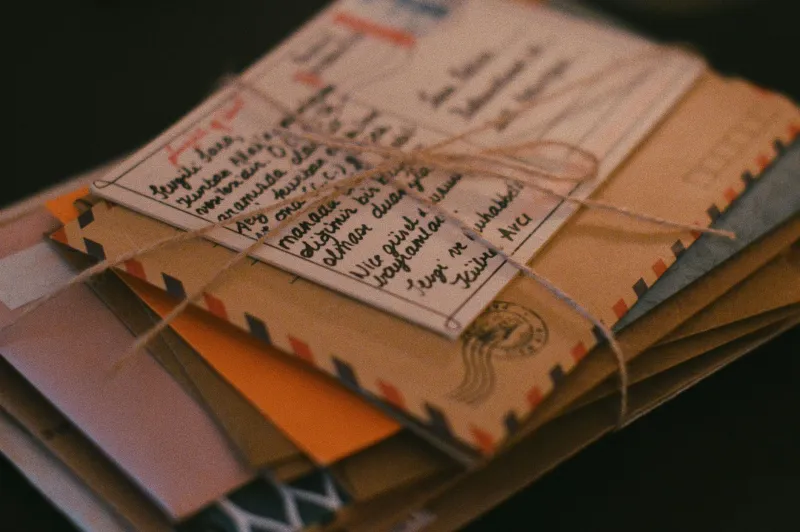
Almost every American family has one. A shoebox, a cedar chest, a manila envelope rubber-banded shut and tucked behind the winter coats. Inside: letters. Real ones, written by hand on actual paper, sent through the mail with a stamp, and kept — sometimes for decades — by the person who received them.
They survive. They outlast the people who wrote them. They turn up at estate sales and in storage units and in the hands of grandchildren who never knew the grandmother who wrote them. They are, in a very literal sense, the physical evidence that someone lived, thought, and cared enough to put it in writing.
Now ask yourself: what are we leaving behind?
When Writing a Letter Was an Event
Through most of the twentieth century, written correspondence was the primary way Americans maintained relationships across distance. Soldiers wrote home from overseas. Young people wrote to their parents from college. Couples separated by circumstance wrote letters that crossed the country by train and truck and carrier.
Writing a letter wasn't casual. You sat down with intention. You chose your words carefully because crossing out and rewriting cost you time and paper. You folded it, addressed it, stamped it, and sent it into the world knowing it would take days to arrive. The recipient would read it, maybe more than once. They might keep it in a drawer or a box or a special folder. The letter had weight — literally and figuratively.
People also kept journals. Diaries were common enough that entire generations left behind detailed records of their inner lives. The diary of an ordinary American woman from 1943 can tell historians — and her own descendants — more about daily life, fear, hope, and personality than any official record ever could.
This wasn't just nostalgia-worthy behavior. It was the infrastructure of personal memory.
The Great Evaporation
Email arrived in the 1990s and accelerated everything. Letters gave way to messages that took seconds to compose and seconds to send. Then texting arrived and made even email feel formal. Then social media came along and turned personal expression into something broadcast, public, and performative.
Today, the average American sends dozens of texts a day. They post on Instagram, share on Facebook, comment on Twitter, and exchange voice notes on WhatsApp. The sheer volume of communication has exploded. But almost none of it is preserved.
Texts get deleted when you upgrade your phone. Social media platforms change their terms of service, shut down, or simply bury old posts in algorithmic obscurity. A Facebook post from 2009 might technically still exist, but it's practically unreachable — and it's stored on a server owned by a corporation that could delete it tomorrow if the business case changed.
MySpace, which once housed the social lives and self-expression of an entire generation of American teenagers, is largely gone. Most of what people posted there — their first attempts at self-presentation, their friendships, their teenage anxieties — has vanished.
What a Letter Actually Contained
There's something specific about handwritten letters that digital communication doesn't replicate. The handwriting itself carries information. You can see when someone was rushing, when they were emotional, when they took extra care. The paper might smell faintly of the house where it was written. A pressed flower, a photograph, a newspaper clipping — these could be folded inside.
Letters were also edited by the act of writing. You couldn't send a letter in the heat of the moment the way you can fire off a text. The time it took to write one gave you the chance to reconsider, to choose kindness over impulse, to say something more true than whatever you would have said immediately.
Historians and biographers have long relied on personal correspondence to reconstruct lives. Abraham Lincoln's letters, the wartime correspondence of ordinary soldiers, the letters exchanged between writers and artists — these are irreplaceable windows into how people actually thought and felt. Future historians studying the early twenty-first century will have very different raw material to work with. Server logs. Deleted accounts. Screenshots. Metadata.
The Permanence Problem
There's a term archivists use: digital decay. It refers to the way digital files become inaccessible over time as formats change, storage media fails, and platforms disappear. A letter written on paper in 1950 is more likely to be readable today than a Word document created in 1995 is to be readable in 2060.
We tend to assume that digital means permanent. It doesn't. It means convenient — which is a completely different thing. The letters in the shoebox survived because someone kept them. Digital messages survive only as long as the platform, the device, and the company that hosts them.
This creates a strange asymmetry. We are producing more communication than any generation in history, and we are likely to leave behind less of it.
What Gets Lost in the Translation
Families used to pass letters down. A grandmother's wartime correspondence, a grandfather's love letters, a parent's postcards from a trip — these became heirlooms. They gave descendants a sense of continuity, a feeling of knowing the people who came before them as full human beings rather than just names on a family tree.
What will our grandchildren inherit from us? Screenshots? Printed-out emails? A USB drive full of formats that may no longer open?
None of this is an argument for going back to quill pens. But it is worth pausing to notice what the speed and convenience of modern communication has quietly cost us. The permanence of words used to be a feature, not a bug. We built our personal histories on it.
Somewhere in an attic, those old letters are still waiting to be found. Ours, probably, are already gone.