Thirty Kinds of Ketchup and Nothing Feels Right: The Hidden Cost of Having Too Much Choice
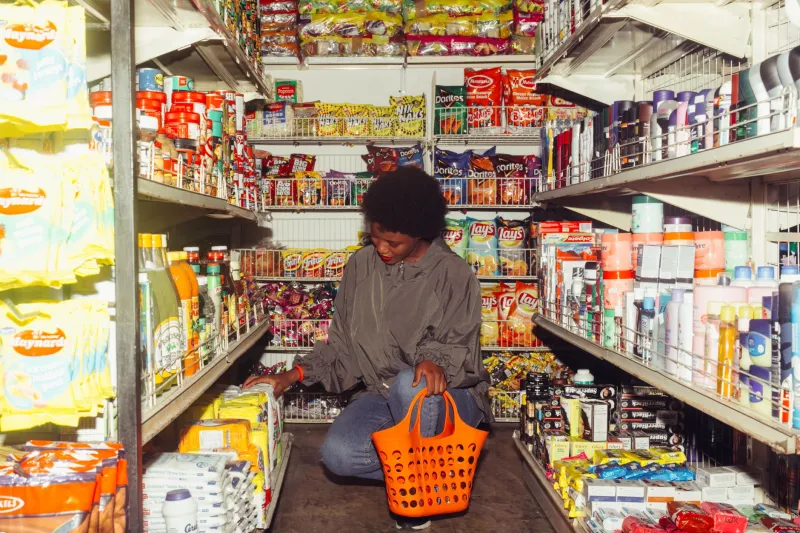
There's a particular kind of exhaustion that didn't exist in 1978. It hits you in the cereal aisle, somewhere between the protein granolas and the ancient grain clusters, when you realize you've been standing there for four minutes and still haven't picked breakfast. Your grandmother would have grabbed the Corn Flakes and moved on. She didn't have a choice. And honestly? That might have been a gift.
One Brand, One Decision, Done
Shopping in the 1970s and early 1980s was a radically simpler transaction. You walked into a store, you found what you needed, and you bought it. There was Heinz ketchup. There was Levi's jeans — maybe in two or three cuts. There was one style of running shoe at the sporting goods store, and if they had your size, you were lucky. The local grocery carried a few hundred items total. The hardware store stocked what the town actually needed.
This wasn't deprivation. It was just the reality of retail before mass globalization and just-in-time manufacturing transformed the supply chain into something almost incomprehensibly vast. People made decisions quickly because the decisions were simple. You trusted the brand on the shelf because it was the only brand on the shelf. You wore what fit because there were three options in your size.
There was a quiet confidence to that kind of shopping. You didn't second-guess yourself on the drive home. You didn't return things because a better version might exist somewhere else. You bought the thing and you used the thing and that was the end of it.
What Happened to the Shelves
The explosion of consumer choice didn't happen overnight, but by the time the internet arrived and e-commerce took hold in the early 2000s, the transformation was complete. Today, Amazon lists over 350 million products. A standard American supermarket carries roughly 40,000 SKUs. A single search for "white t-shirt" on a major retail site returns thousands of results, each with its own sizing variations, fabric weights, and customer reviews arguing passionately for and against the collar construction.
The forces behind this are easy to understand: cheaper manufacturing, global supply chains, lower barriers to market entry, and a digital retail environment where shelf space is essentially infinite. Theoretically, this is the consumer dream. Competition drives prices down. Niche preferences get served. Nobody has to settle.
Except that's not quite how it's playing out in people's heads.
The Paradox Nobody Warned Us About
Psychologist Barry Schwartz coined the term "paradox of choice" back in 2004, and the idea has only grown more relevant since. His central argument: beyond a certain threshold, more options don't make us happier — they make us more anxious, more prone to regret, and less satisfied with whatever we ultimately choose.
The mechanism is almost cruel in its logic. When you had one option, a bad purchase was just bad luck. When you have five hundred options and you still end up with something disappointing, the failure feels personal. You should have researched more. You should have read the reviews. You should have waited for a better deal. The abundance of choice transfers the burden of outcome entirely onto the shopper.
And we've built entire industries around managing that burden. There are browser extensions that hunt for coupons automatically. There are subreddits dedicated to recommending the single best version of any given product. There are YouTube channels with millions of subscribers whose entire purpose is to watch someone else make a purchase decision so you don't have to agonize over it yourself.
Decision Fatigue Is Real — and It Costs You
Researchers have documented something called decision fatigue: the way the quality of our choices deteriorates after we've made too many of them in a row. Judges grant fewer paroles late in the afternoon. Shoppers buy more impulsively after long browsing sessions. The mental energy required to evaluate options is finite, and modern retail burns through it at a remarkable pace.
This is part of why so many people now outsource their choices entirely. Subscription boxes that just send you stuff. Algorithm-driven playlists that pick the music. Meal kits that eliminate the question of what's for dinner before it can even form. There's a real irony in the fact that one of the most popular consumer trends of the last decade — the curated subscription — is essentially paying someone to give you fewer choices.
What We Actually Lost
Beyond the stress and the fatigue, something subtler changed when choice became infinite. Shopping used to carry a kind of finality. You bought the coat. It was your coat now. You made it work, you wore it for years, and eventually it became part of your story. The constraints of limited choice pushed people toward commitment — toward making things last, making things fit, making things theirs.
Today, the implicit promise of infinite options is that something better is always one click away. That's not entirely wrong. But it makes it very hard to feel settled. Returns have skyrocketed — Americans returned over $800 billion in merchandise in a single recent year — and a significant chunk of that isn't defective product. It's buyer's remorse born from the nagging sense that the perfect version of this thing probably exists somewhere.
Your grandmother didn't lie awake wondering if she'd bought the right ketchup. She had Heinz. It was fine. Life moved on.
Maybe the real luxury isn't having everything available. Maybe it's being able to decide quickly, feel good about it, and get on with your day. That version of shopping is gone, and it turns out we didn't fully appreciate it until the shelves got very, very crowded.