The Emergency Number Nobody Knew: How America Survived Before 911 Connected Us All
Picture this: Your neighbor collapses in their driveway, clutching their chest. Today, you'd instinctively dial 911. But if this happened in 1965, you'd be frantically flipping through a phone book, trying to remember if the local ambulance service was listed under "A" for ambulance or "F" for funeral home — because yes, the same people who buried the dead often transported the dying.
When Every Town Had Its Own Emergency Playbook
Before the late 1970s, America's emergency response system was a chaotic patchwork of local arrangements that varied wildly from town to town. Some cities had dedicated emergency numbers, others required you to call the police directly, and many rural areas had no formal system at all. In Chicago, you called CAlumet 5-1313 for fire emergencies. In Los Angeles, it was different. Drive two towns over? Good luck figuring out the local code.
This wasn't just inconvenient — it was deadly. Emergency dispatchers tell stories of precious minutes lost while panicked callers tried to remember the right number, or worse, dialed the wrong one entirely. Imagine explaining a heart attack to three different operators before reaching someone who could actually send help.
The Funeral Home Ambulance Era
Here's where things get truly bizarre by today's standards: for decades, America's ambulance services were primarily run by funeral homes. It made twisted economic sense — they already owned large vehicles, knew the hospitals, and were comfortable around medical emergencies. The same hearse that would carry you to your final rest might have been your ride to the emergency room.
But funeral directors weren't paramedics. These "ambulances" were essentially taxis with stretchers. No medical equipment, no trained personnel, no life-saving interventions during transport. You got loaded in, driven fast, and hoped for the best. Many of these vehicles couldn't even maintain radio contact with hospitals.
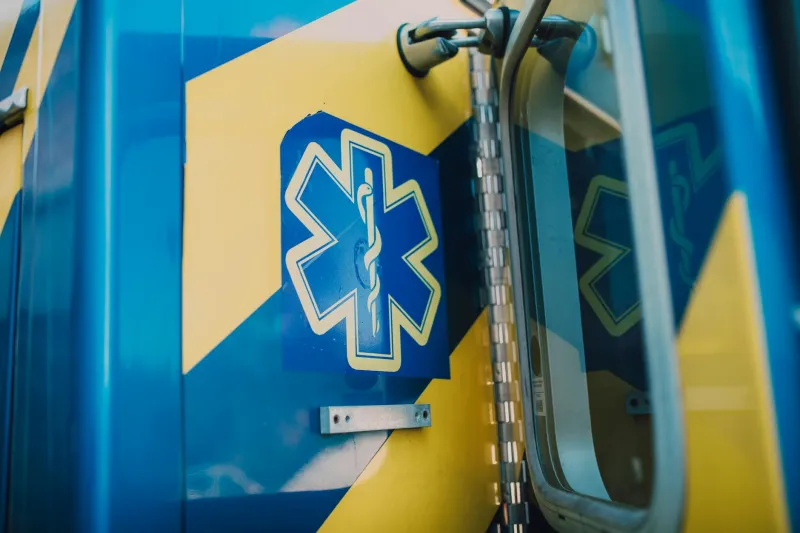
Compare that to today's mobile intensive care units, staffed with paramedics who can perform everything from intubation to cardiac defibrillation while racing to the hospital. Modern ambulances are essentially emergency rooms on wheels — a concept that would have seemed like science fiction to Americans in the 1960s.
Hospitals That Could Say No
Even if you managed to call the right number and catch a ride, your troubles weren't over. Before the Emergency Medical Treatment and Labor Act of 1986, hospitals had no legal obligation to treat emergency patients who couldn't pay. "Patient dumping" was a real and common practice — ambulances would be turned away from private hospitals and redirected to overcrowded public facilities, sometimes across town.
This created a two-tiered system where your ZIP code and wallet determined your chances of survival. Wealthy neighborhoods had well-equipped hospitals that might treat you; poor areas had understaffed clinics that were often overwhelmed. The idea that any American could walk into any emergency room and receive life-saving care regardless of ability to pay was still decades away.
The 911 Revolution
The transformation began in 1968 when the Federal Communications Commission designated 911 as the national emergency number. But rollout was painfully slow. The first 911 call was made in Haleyville, Alabama, in 1968, yet by 1979, only 26% of Americans had access to the system.
The difference was revolutionary. Instead of memorizing multiple numbers, Americans only needed to remember three digits. Calls were routed to centralized dispatch centers staffed with trained operators who could coordinate police, fire, and medical responses simultaneously. Geographic information systems could pinpoint caller locations, eliminating the deadly delays caused by incorrect addresses or panicked descriptions.
By the 1990s, enhanced 911 systems could identify caller locations automatically, even from mobile phones — technology that seemed impossible when emergency response meant hoping the operator at the local volunteer fire department happened to be home.
The Paramedic Profession Emerges
Parallel to the 911 rollout, America was creating an entirely new medical profession: paramedics. Inspired by military battlefield medicine from Vietnam, the first civilian paramedic programs launched in the early 1970s. These weren't just drivers — they were trained to perform advanced medical procedures in the field.
The transformation was dramatic. Suddenly, heart attack victims could receive defibrillation within minutes instead of waiting to reach a hospital. Accident victims got IV fluids and airway management on scene. Survival rates for cardiac arrest jumped from single digits to over 30% in areas with advanced paramedic services.
What We Take for Granted
Today's emergency response system is so seamless we barely think about it. Your smartphone can automatically share your location with 911 operators. Ambulances carry equipment that rivals hospital emergency rooms. Helicopter air ambulances can reach rural areas within minutes. Emergency rooms are legally required to stabilize anyone who walks through the door.
This infrastructure didn't exist fifty years ago. Americans once lived in a world where surviving an emergency often came down to luck — knowing the right phone number, living near the right hospital, having the right insurance. The coordinated, professional emergency response system we consider a basic government service is actually a relatively recent innovation.
The next time you see an ambulance racing down the street, remember: that sophisticated mobile medical unit, staffed with trained paramedics, responding to a simple three-digit call, represents one of the most remarkable transformations in American public safety. We went from a chaotic patchwork of funeral home hearses to a coordinated life-saving network in just two decades — and millions of Americans are alive today because of that change.