When Banks Knew Your Name and Houses Cost Three Times Your Salary

The Home-Buying Handshake That Built America
In 1973, Tom Bradley walked into First National Bank of Springfield, sat across from loan officer Margaret Walsh—who'd handled his parents' mortgage fifteen years earlier—and walked out with approval for a $24,000 home loan. The house cost exactly 2.8 times his annual teacher's salary. The whole process took two weeks.
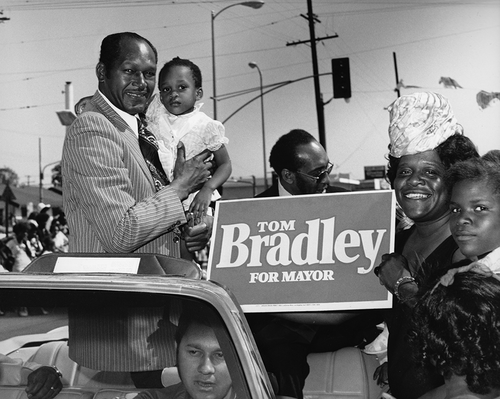 Photo: Tom Bradley, via images.squarespace-cdn.com
 Photo: First National Bank of Springfield, via www.advancedonlineinsights.com
Tom's grandson Jake recently spent eight months in a bidding war for a house that cost eleven times his software engineer salary. He submitted his offer through an app, competed against seven cash buyers, and still lost to an investment firm that waived all contingencies.
Somewhere between Tom's handshake and Jake's app, the American Dream got hijacked by algorithms, speculation, and financial engineering.
When Mortgages Were Relationships, Not Algorithms
Mid-century home buying operated on a simple principle: banks lent money to people they knew, for houses they could afford, in neighborhoods they understood. Loan officers like Margaret Walsh lived in the same communities where they approved mortgages. They knew local employers, understood neighborhood values, and could assess creditworthiness through personal relationships.
The process was straightforward. You needed 20% down, proof of steady employment, and a debt-to-income ratio under 25%. Interest rates were fixed by regulation—around 6% for most of the 1970s—and stayed that way for the life of your loan. No adjustable rates, no interest-only periods, no exotic financial instruments.
Most importantly, you were competing against other families, not faceless investment funds with unlimited capital.
The Mortgage Factory Revolution
The 1980s brought deregulation and securitization—fancy terms for turning mortgages into tradeable commodities. Local banks began selling loans to Wall Street, which bundled them into securities and sold them to investors worldwide. Suddenly, your mortgage wasn't held by Margaret Walsh at First National; it belonged to a pension fund in Germany.
This system created enormous efficiency and liquidity. More people could get mortgages, and rates could float with market conditions rather than regulatory fiat. Credit scores replaced personal relationships, and automated underwriting systems could process applications in hours, not weeks.
But efficiency came with costs. Banking became impersonal, and housing became a global investment asset rather than just a place to live.
When Houses Were Homes, Not Investment Vehicles
In Tom Bradley's era, most homes were purchased by families who intended to live in them for decades. Real estate speculation existed but remained largely confined to commercial properties and obvious development opportunities. Suburban neighborhoods consisted almost entirely of owner-occupied homes.
The typical 1970s home buyer made a 20% down payment, stayed in their house for fifteen years, and paid off their mortgage early when possible. Home appreciation was steady but modest—roughly matching inflation over time. Houses were stores of value, not get-rich-quick schemes.
This stability created predictable housing markets where families could plan for the future. If you could afford rent, you could probably afford a mortgage payment on a similar property.
The Speculation Economy Takes Over
Today's housing market operates more like a stock exchange than a neighborhood marketplace. Institutional investors purchase entire subdivisions before they're completed. Foreign capital flows into American real estate as a safe haven investment. Algorithmic trading firms flip houses like day traders flip stocks.
Airbnb transformed residential neighborhoods into commercial hospitality districts. Cryptocurrency millionaires bid sight-unseen on properties they'll never visit. Real estate investment trusts (REITs) allow ordinary investors to speculate on housing markets across the country.
Meanwhile, first-time buyers find themselves outbid by cash offers that close in a week, waive inspections, and exceed asking prices by 20% or more. What was once a straightforward transaction between families has become a complex financial battlefield.
The Mathematics of Impossibility
The numbers tell the story starkly. In 1970, the median home cost $23,400 while median household income was $8,734—a ratio of 2.7 to 1. Today, median home prices exceed $400,000 while median household income hovers around $70,000—a ratio of nearly 6 to 1.
This means today's buyers need to save for twice as long, carry twice as much debt relative to their income, and compete in markets where price appreciation often outpaces wage growth. What previous generations accomplished with high school diplomas and steady jobs now requires college degrees, dual incomes, and often financial help from family.
The 30-year mortgage payment that once consumed 20% of household income now often exceeds 30%, leaving less money for everything else that makes life meaningful.
When Community Banks Cared About Communities
Margaret Walsh didn't just approve mortgages; she helped build neighborhoods. Community banks had vested interests in local prosperity because their depositors, borrowers, and shareholders all lived nearby. Predatory lending hurt the bank's own community, making it both economically and socially unacceptable.
These banks understood local employment patterns, knew which neighborhoods were stable, and could assess character alongside creditworthiness. They also kept mortgages on their books, meaning they cared whether borrowers could actually afford their payments over the long term.
Today's mortgage originators often sell loans immediately after closing, transferring default risk to distant investors. This creates incentives to approve marginal borrowers and push loan amounts to the maximum allowable limits.
The Technology That Divided Us
Modern real estate technology promises efficiency and transparency, and in many ways delivers both. Online listings, virtual tours, and digital document signing make house hunting more convenient than ever. Algorithmic valuations provide instant price estimates, and automated underwriting speeds approvals.
But technology also enabled the financialization that transformed housing from a local market into a global commodity. High-frequency trading algorithms can bid on properties faster than human buyers can think. International investment platforms allow foreign capital to flow into American neighborhoods with unprecedented ease.
The same tools that were supposed to democratize real estate access have often made it less accessible for ordinary families.
The Price of Progress
Nobody wants to return to the discriminatory lending practices that excluded minorities and women from homeownership for decades. The old system's personal relationships too often meant personal prejudices, and its stability came partly from exclusion.
But we've swung so far toward financialization that we've lost something essential: the idea that housing markets should primarily serve the people who actually live in houses, not the investors who trade them like commodities.
Tom Bradley's grandson Jake will eventually buy a house, but it will cost him far more, take much longer, and require sacrifices his grandfather never had to make. Progress in housing finance brought us efficiency and innovation, but it also brought us a market where teachers can't afford to live in the communities where they work.
The handshake deal is gone forever, but perhaps we can still remember what it was trying to accomplish: helping families build stable lives in the places they call home.