When Your Doctor Squeezed You In Before Lunch: How America's Same-Day Care Became Next-Month Medicine
The Phone Call That Used to Work
Picture this: It's 1982, and you wake up with a persistent cough that won't quit. You call Dr. Peterson's office at 9 AM, speak directly to his receptionist Margaret—who recognizes your voice—and she says, "Can you make it in around 2:30? Dr. Peterson just had a cancellation."
By 3 PM, you're walking out with a prescription and a pat on the shoulder.
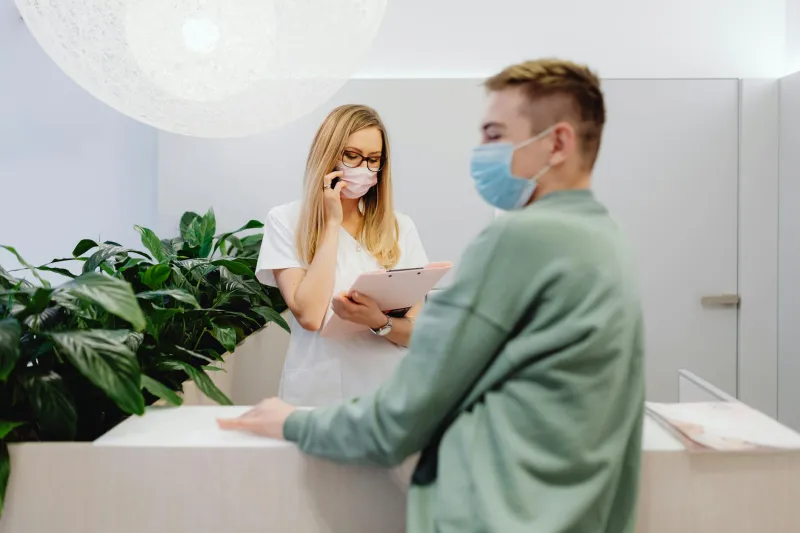
Now imagine making that same call today. You'll navigate a phone tree, wait on hold for twenty minutes, only to be told the next available appointment is in six weeks. If it's urgent, they'll suggest the emergency room—for a cough.
Somewhere between then and now, American healthcare lost its ability to see you when you're actually sick.
The Golden Age of Getting Squeezed In
In the 1970s and early 1980s, the typical family practice operated on what doctors called "open access scheduling." Most physicians reserved 20-30% of their daily appointments for same-day visits. The concept was revolutionary in its simplicity: sick people needed to be seen when they were sick, not when it was convenient for a scheduling system.
Dr. Margaret Chen, who practiced family medicine in suburban Chicago from 1975 to 2010, remembers those days clearly. "We had what we called 'squeeze-in' appointments. If Mrs. Johnson called with chest pain, we found a way to see her that day. Period. The idea of telling a sick patient to wait three weeks was unthinkable."
Back then, the average wait time for a routine physical was about a week. For urgent concerns, same-day appointments were the standard, not the exception. Doctors' schedules had breathing room built in, and practices were small enough that flexibility was possible.
When Everything Changed
The transformation didn't happen overnight, but by the 2000s, the writing was on the wall—or rather, on the appointment book. Several forces converged to create the access crisis we know today.
First came the insurance revolution of the 1990s. As HMOs and managed care took over, doctors found themselves spending more time on paperwork and less time with patients. To maintain income, many physicians had to see more patients per day, leaving less room for spontaneous appointments.
Then came consolidation. The solo practitioner who knew your family's medical history gave way to large medical groups and hospital-owned practices. These corporate entities prioritized efficiency metrics over patient relationships, and "squeeze-in" appointments didn't fit neatly into their productivity models.
The final blow was the physician shortage that began accelerating in the early 2000s. As medical school costs soared and reimbursement rates stagnated, fewer doctors entered primary care. The American Association of Medical Colleges estimates we'll face a shortage of up to 48,000 primary care physicians by 2034.
Today's Appointment Reality
Today, the average wait time for a new patient appointment with a primary care physician is 26 days in major metropolitan areas. In some specialties, like dermatology or rheumatology, patients routinely wait three to six months.
But it's not just new patients feeling the squeeze. Established patients often find themselves booking routine check-ups months in advance, and when they actually get sick, they're directed to urgent care centers or emergency rooms—facilities that didn't even exist in most communities forty years ago.
The ripple effects are profound. Minor health issues that could have been caught and treated quickly in 1982 now fester for weeks or months. Patients delay seeking care because they know it's such a hassle to get an appointment. Emergency rooms, never designed for routine care, are overwhelmed with patients who simply couldn't wait.
The Human Cost of the Wait
Behind every scheduling delay is a human story. The working parent who can't get time off for an appointment six weeks away. The elderly patient whose symptoms worsen while waiting to be seen. The young adult who gives up on preventive care because booking an appointment feels impossible.
Dr. Sarah Williams, who now practices in a large medical group in Phoenix, reflects on the change: "I became a doctor to help people when they needed it most. Now I spend my days apologizing to patients for how long they had to wait to see me. It's heartbreaking, and it's not sustainable."
What We Lost Along the Way
The shift from same-day access to months-long waits represents more than just inconvenience—it's a fundamental change in how we think about healthcare. The old system wasn't perfect, but it recognized a simple truth: illness doesn't follow a schedule.
When Dr. Peterson could squeeze you in before lunch, he wasn't just treating your cough. He was catching your diabetes early, noticing your depression, and building the kind of relationship that made preventive care possible. That relationship, and the trust it built, may be the biggest casualty of our appointment crisis.
Today's patients don't just wait longer—they wait as strangers, seeing whoever happens to be available in a system that values efficiency over familiarity. We've traded the family doctor who knew your story for appointment slots that treat symptoms, not people.
The irony is stark: in an age of instant everything, getting basic healthcare has never taken longer. We can order dinner, summon a ride, and video chat with friends around the world at the touch of a button. But scheduling time with a doctor? That'll be six weeks, if you're lucky.