When Your Doctor Knew Your Dog's Name: How American Healthcare Lost Its Memory
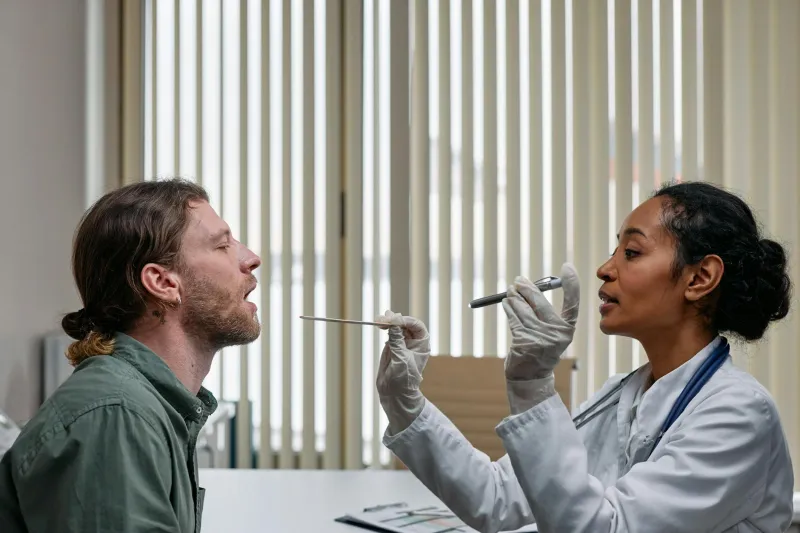
Picture this: You walk into Dr. Peterson's office in 1975. He's been your family doctor for fifteen years. He asks about your mother's arthritis, remembers your daughter just started college, and notices you're favoring your left shoulder differently than you did six months ago. No chart needed—he knows your story.
Fast-forward to today. You're sitting in an urgent care center, explaining your medical history to a physician assistant you've never met, who's simultaneously typing notes into a computer and trying to decipher records from three different healthcare systems. Welcome to modern American medicine.
The Era of the Family Doctor
For most of the 20th century, American healthcare operated on a simple principle: one doctor, one family, for life. These weren't just medical providers—they were community fixtures who delivered babies, treated grandparents, and knew which families had genetic predispositions to heart disease or diabetes.
Dr. Marcus Welby wasn't just a TV character; he represented a real model of care. Family doctors made house calls, knew their patients' work schedules, and could spot depression or domestic violence because they'd watched families evolve over decades. They practiced what we now call "longitudinal care"—medicine with a memory.
In 1950, about 75% of American doctors were general practitioners. They handled everything from broken bones to heart attacks, referring to specialists only when absolutely necessary. More importantly, they served as the central hub for all medical decisions, coordinating care and maintaining the big picture of each patient's health.
The Great Fragmentation
Somewhere between the 1980s and today, American healthcare shattered into a thousand pieces.
Specialization exploded. Insurance networks created artificial boundaries. Electronic health records, promised as the solution to continuity, instead created digital silos that rarely talk to each other. The average American now sees 18.7 different healthcare providers over their lifetime, compared to 2.3 in 1960.
Today's primary care physicians—when you can find one—manage panels of 2,500 patients or more, compared to the 800-1,000 that experts say allows for quality care. They have an average of 11 minutes per patient visit. That's barely enough time to address an acute problem, let alone maintain the kind of relationship that catches subtle changes in health or behavior.
What We Gained—And What We Lost
The transformation wasn't entirely negative. Specialization brought incredible advances. A cardiologist today knows more about hearts than any 1950s family doctor ever could. Emergency medicine saves lives that would have been lost decades ago. Diagnostic technology can spot diseases that once went undetected until it was too late.
But research increasingly shows what we sacrificed for these gains. Studies consistently demonstrate that patients with continuous primary care relationships have better health outcomes, lower mortality rates, and significantly reduced healthcare costs. They're more likely to get preventive care, less likely to end up in emergency rooms, and more satisfied with their overall care.
A 2019 study in JAMA Internal Medicine found that patients who maintained relationships with the same primary care physician for just two years had 25% lower mortality rates than those who switched providers frequently. The researchers called it the "continuity effect"—the measurable health benefit of being truly known by your doctor.
The Human Cost of Efficiency
Consider what happens when you don't have a medical advocate who knows your story. That nagging fatigue gets dismissed by three different urgent care doctors before the fourth finally orders the blood work that reveals your thyroid condition. The subtle personality changes that your longtime family doctor would have caught early get missed until your depression becomes severe.
Patients report feeling like "just another number" in today's system. They repeat their medical histories to strangers, navigate complex referral networks alone, and often leave appointments feeling unheard. The art of medicine—reading between the lines, understanding the whole person—has been largely replaced by algorithmic protocols and efficiency metrics.
The Price of Knowing Nobody
Dr. Sarah Chen, who practices family medicine in Portland, Oregon, puts it bluntly: "I have patients I've seen five times who I still couldn't pick out of a lineup. That's not medicine—that's just processing."
The numbers tell the story. Physician burnout has reached epidemic levels, with over 50% of doctors reporting symptoms. They entered medicine to heal people, not to be data entry clerks managing impossible patient loads. Meanwhile, patients bounce between providers like pinballs, their stories scattered across incompatible computer systems.
Even when electronic health records work perfectly, they can't capture what the old family doctors knew instinctively: how someone's stress at work affects their blood pressure, why they really skip their medications, or what that slight change in their gait might signal.
Can We Find Our Way Back?
Some healthcare systems are experimenting with solutions. Concierge medicine offers continuity—for those who can afford it. Some practices are reducing patient panels and extending visit times. A few health systems are actually succeeding at making electronic records communicate with each other.
But these remain exceptions in a system designed for efficiency over relationships. The economics of modern healthcare—insurance reimbursements, hospital consolidation, student loan debt—all push against the kind of long-term doctor-patient relationships that once defined American medicine.
The Memory We're Missing
There's something profound we lost when healthcare stopped having a memory. It's not just about medical outcomes, though those matter enormously. It's about being known, being seen as a whole person rather than a collection of symptoms and billing codes.
Your grandfather's doctor knew his story—not just his medical history, but his actual story. Today's healthcare system, for all its technological marvels, has largely forgotten how to listen to those stories. And in losing that, we may have lost something essential about what it means to heal.