When Your Pharmacist Knew Your Blood Pressure Better Than Google Knows Your Search History
When Your Pharmacist Knew Your Blood Pressure Better Than Google Knows Your Search History
Walk into any CVS or Walgreens today, and you'll likely encounter a scene that would puzzle your grandparents: customers lined up at a counter, barely making eye contact with the white-coated figure behind bulletproof glass, grabbing prescription bags with robotic efficiency. Some don't even bother with human contact—they're using the automated kiosk in the corner, punching in their birthday and phone number like they're withdrawing cash from an ATM.
This sterile transaction would be unrecognizable to Americans who filled prescriptions in the 1960s and 70s, when the neighborhood pharmacy operated more like a medical consultation room than a retail checkout line.
The Corner Store That Doubled as a Clinic
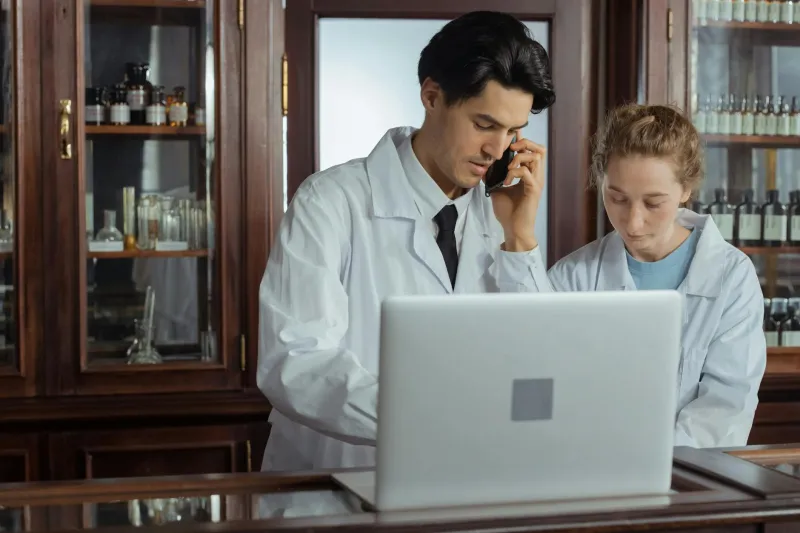
Back then, Mel's Pharmacy on Main Street wasn't just where you picked up pills—it was where you went for answers. The pharmacist behind that counter knew that Mrs. Johnson's arthritis flared up every winter, that teenage Tommy was struggling with acne medication compliance, and that Mr. Peterson's new heart pills might not play well with his longtime sleep aids.
These weren't superhuman memory feats. In smaller communities, pharmacists often served the same families for decades, building relationships that resembled those of family doctors. They kept handwritten index cards tracking each customer's medication history, allergies, and health concerns. When you walked in with a new prescription, the pharmacist would pull your card and actually read through your entire medication profile—not because a computer flagged a potential interaction, but because they genuinely knew your health story.
"My father could tell you the names of his customers' grandchildren," recalls Janet Morrison, whose dad ran Morrison's Pharmacy in small-town Ohio from 1955 to 1987. "He knew who was diabetic, who had high blood pressure, who was trying to get pregnant. That wasn't invasion of privacy—that was healthcare."
When Consultation Came Standard
Perhaps most remarkably, this personalized attention wasn't an upcharge or premium service—it was simply how pharmacy worked. Pharmacists routinely spent 10 to 15 minutes with customers, explaining not just how to take medications, but why they mattered, what side effects to watch for, and how the new prescription fit into their overall health picture.
They'd notice patterns that today's algorithms miss. If a customer seemed confused about dosing instructions, the pharmacist might call their doctor to clarify. If someone appeared to be stretching medications too long—a sign they couldn't afford refills—the pharmacist might quietly work out a payment plan or suggest generic alternatives.
"The pharmacist was like having a medical translator," explains Dr. Sarah Chen, a healthcare historian at Northwestern University. "Doctors wrote prescriptions, but pharmacists helped patients understand what those prescriptions actually meant for their daily lives."
The Chain Revolution Changed Everything
The transformation didn't happen overnight. Through the 1980s and 90s, independent pharmacies gradually gave way to national chains promising lower prices and greater convenience. Those promises largely delivered—medications did become cheaper and more accessible. But something subtler was lost in the translation.
Chain pharmacies operate on volume and efficiency metrics that independent stores never faced. Pharmacists at major chains often fill 300 to 400 prescriptions per day, compared to the 50 to 100 that small-town pharmacists handled in previous decades. The economics are simple: more prescriptions filled means more revenue, and extended consultations slow down the assembly line.
Modern pharmacy software has replaced those handwritten index cards with sophisticated databases that can flag drug interactions faster than any human memory. But computers excel at identifying technical conflicts—they can't assess whether a customer seems confused, overwhelmed, or unable to afford their medications.
What the Drive-Through Can't Deliver
Today's pharmacy experience prioritizes speed and convenience over relationship-building. Drive-through windows, automated refill systems, and mail-order delivery have made prescription pickup faster than ever. You can refill medications through smartphone apps without speaking to a human being at all.
These innovations solve real problems—they're especially valuable for people with mobility limitations or busy schedules. But they've also created a healthcare blind spot. The pharmacist who might have noticed that an elderly customer seemed unusually forgetful, or that a regular customer hadn't picked up their blood pressure medication in months, now processes transactions without meaningful interaction.
"We've gained efficiency and lost intimacy," notes pharmacy researcher Dr. Michael Torres. "The question is whether that trade-off was worth it—especially for vulnerable populations who benefited most from that personal attention."
The Human Element in Healthcare
The shift reflects a broader transformation in American healthcare, where personal relationships have been replaced by standardized protocols and digital interfaces. While modern pharmacy offers undeniable improvements—better drug safety monitoring, lower costs, greater accessibility—it's worth acknowledging what disappeared in the process.
Your neighborhood pharmacist used to be a safety net, catching medication errors and health concerns that might slip through larger healthcare systems. They provided a human touch in medical care, offering reassurance and explanation that many patients desperately needed.
Today, that prescription bag you grab from the drive-through window contains the same medications, backed by more sophisticated safety systems than ever before. But it no longer comes with the irreplaceable ingredient that once defined pharmacy: someone who knew your name, your health history, and genuinely cared about both.
The pills work just as well. The question is whether the people taking them are getting everything they need.