No GPS, No Rush, No Problem: When the American Road Trip Was About Getting Lost on Purpose
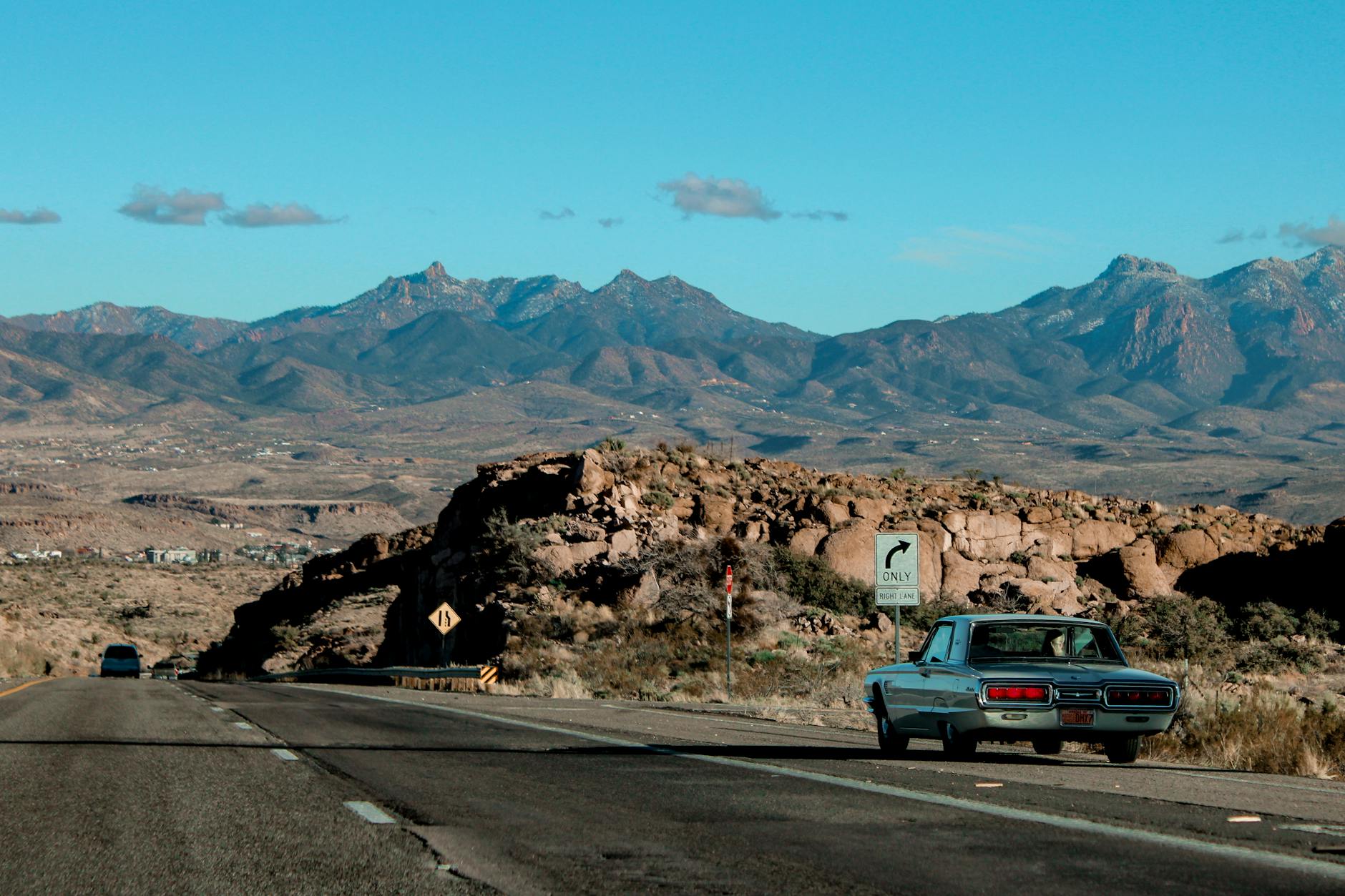
Photo: Road Travel America, Public domain, via Wikimedia Commons
Somewhere around 1971, a family from suburban Cincinnati loaded a station wagon with luggage, a cooler full of sandwiches, and four kids who'd been arguing since the driveway. The destination was somewhere in the general direction of Yellowstone. The route was approximate. The timeline was loose. The plan, to the extent there was one, involved a paper map with a highlighted line that the dad had drawn the night before — and a general understanding that if something interesting appeared by the side of the road, you stopped.
That trip probably took three weeks. It almost certainly included a detour or two that nobody planned. It may have involved a night in a motor court that smelled like mildew, a diner where the pie was inexplicably perfect, and a roadside attraction that made absolutely no logical sense but that the kids talked about for years.
That's what a road trip used to be. And it's not really what a road trip is anymore.
The Road as the Destination
The American love affair with the road trip has roots that run deep. Route 66 was more than a highway — it was a mythology. John Steinbeck drove the country's imagination west through the Dust Bowl. Jack Kerouac made wandering seem like a spiritual practice. By the postwar decades, with the Interstate Highway System under construction and a booming middle class with disposable income and vacation time, the family road trip became a genuine institution.
 Photo: Interstate Highway System, via lookaside.instagram.com
What defined those trips wasn't efficiency. It was the opposite of efficiency. Families loaded up and drove, and the driving itself was part of the experience. You passed through actual towns — not bypassed them on the interstate — and those towns had their own characters. A diner in Missouri that had been serving the same blue plate special since 1948. A roadside dinosaur park in South Dakota that existed for no discernible reason. A stretch of bayou in Louisiana that made the whole car go quiet.
None of this was on a list. None of it was optimized. It happened because you were moving slowly enough, and openly enough, to let it happen.
The Paper Map and the Art of Approximate Navigation
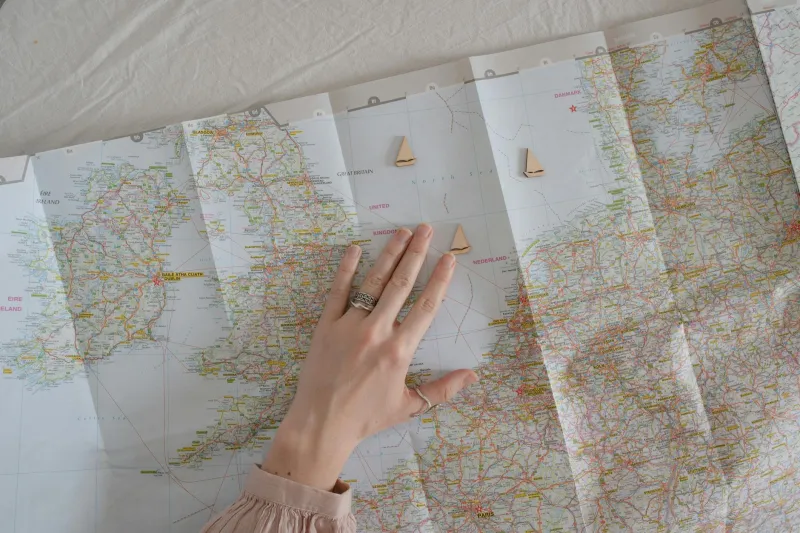
Before GPS, navigation was a collaborative, occasionally tense, family activity. The map lived in the glovebox, got unfolded to approximately the size of a tablecloth, and was consulted with varying degrees of success by whoever was riding shotgun. Arguments happened. Wrong turns happened. And occasionally, a wrong turn led somewhere better than the original destination.
This wasn't just inconvenient. It was generative. Kids learned to read maps, to pay attention to road signs, to notice where the sun was in relation to where they were going. Parents made decisions in real time, without the safety net of a calm British voice telling them to recalculate. The family had to figure things out together.
When you got lost — and you did get lost — you stopped and asked someone. That someone was usually a local, and locals knew things that no map contained. The best fishing spot. The shortcut that cut forty minutes off the drive. The fact that the motel on the highway was a disaster but the one on the county road was run by a woman who made biscuits in the morning.
Those interactions were part of the trip. They were, in a quiet way, the trip.
Roadside America: The World You Drove Through
One of the casualties of optimized travel is roadside America — the ecosystem of stops, attractions, and businesses that once lined the routes families drove.
Motor courts and motor lodges, the predecessors of the modern motel, had distinct personalities. Diners attached to gas stations served food that was specific to their region. Tourist traps — and there were spectacular ones — offered a version of American weirdness that was genuinely charming. The World's Largest Ball of Twine. Mystery Spots. Reptile farms. Roadside zoos of questionable ethics but undeniable memorability.
These places existed because slow travel made them viable. When families were driving two-lane highways at fifty miles an hour with restless kids in the back, a sign promising something unusual was irresistible. The interstate era began to kill them off. GPS finished the job for many survivors. When your navigation app routes you around rather than through, the businesses that depended on through-traffic disappear.
What Replaced the Wandering
Modern travel is remarkably efficient. You can fly from New York to Los Angeles in five and a half hours for a price that, adjusted for inflation, is far lower than it would have been in 1970. If you do drive, Google Maps will route you with precision, estimate your arrival time to the minute, and warn you about traffic delays thirty miles ahead.
The kids in the backseat have tablets. The car might have its own Wi-Fi. The same streaming libraries that entertain them at home follow them down the highway. There is no boredom, which means there is no staring out the window, which means there is less of that particular kind of thinking — slow, undirected, landscape-driven — that long drives used to produce.
And the destination is usually fixed, researched, reviewed, and booked weeks in advance. The hotel has 847 reviews on TripAdvisor. The restaurant has been vetted by three food blogs. The uncertainty has been engineered out, and with it, the possibility of the unexpected good thing.
The Unhurried Education
There's something worth naming about what those old road trips actually did for the families who took them. They were, quietly, an education in American geography, culture, and scale.
Kids who rode from Ohio to Yellowstone and back understood, in a way that no classroom could fully convey, how big the country actually is. They understood that it changes — that Kansas looks nothing like Colorado, that the Mississippi River is a genuine event, that the West begins somewhere around the hundredth meridian where the land goes flat and dry and enormous.
They understood that the country was made of towns, and that those towns had their own rhythms and their own characters. That the people in them were different from the people back home, and also not that different. Road trips were a civics lesson delivered through a windshield.
What Remarkably Changed
The family road trip hasn't disappeared entirely. People still load up cars and drive. But the version that shaped a generation — slow, wandering, map-dependent, open to detour — has largely given way to something faster, more certain, and less surprising.
We traded the journey for the destination, and the trade made sense by almost every measurable standard. It's cheaper to fly. It's faster to drive with GPS. It's easier when everyone has a screen.
What's harder to measure is what happened in the back of that station wagon on a two-lane highway in 1971, when the landscape unfolded at a human pace and the whole family was, for once, completely present in the same moving moment.
Some things don't show up in the efficiency calculation.