From Days of Dread to Results Before Dinner: The Quiet Revolution Inside America's Blood Labs
From Days of Dread to Results Before Dinner: The Quiet Revolution Inside America's Blood Labs
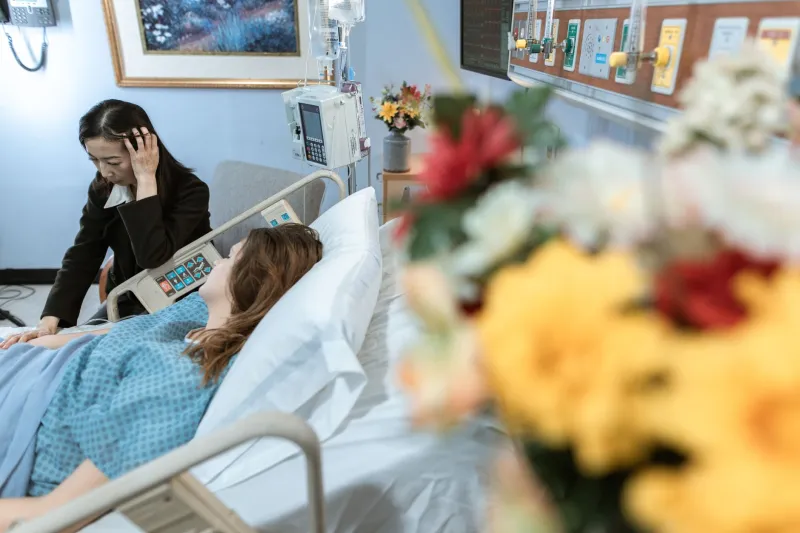
There was a particular kind of dread that came with getting your blood drawn in 1978. You'd roll up your sleeve, watch the vials fill, and then — nothing. You went home and waited. Maybe three days. Maybe a week. The results traveled by mail or arrived as a clipped message from your doctor's receptionist: "The doctor reviewed your labs. Everything looks fine. He'll see you if anything changes." That was it. No numbers. No context. No portal. Just someone else's summary of your own body.
Most Americans under forty have never experienced that kind of diagnostic limbo. And they probably don't realize just how recently it ended.
What a Blood Test Actually Looked Like in the 1970s and 80s
Routine bloodwork in mid-century America wasn't the streamlined process it is today. For starters, many tests required you to visit a hospital-affiliated lab — not a freestanding clinic, not a pharmacy, and certainly not a retail walk-in center. Depending on where you lived, that might mean driving across town to the only facility equipped to run a comprehensive metabolic panel.
The analysis itself was largely manual. Lab technicians ran samples through processes that were time-consuming by design. Certain tests were batched — meaning your sample might sit until enough others accumulated to make the run worthwhile. Turnaround times of five to seven business days weren't unusual for anything beyond the most basic work. For specialized panels, two weeks wasn't out of the question.
When results did arrive, they came to your doctor, not to you. Patients were considered passive recipients of medical information — a philosophy that shaped the entire system. If your numbers looked alarming, you'd get a call. If they looked routine, you might never hear a word. The idea that a patient might want to see the raw data, let alone interpret it, simply wasn't part of the conversation.
The Technology That Changed Everything
The transformation didn't happen overnight, but it accelerated dramatically through the 1990s and into the 2000s. Automated analyzers replaced much of the manual work, allowing labs to process hundreds of samples per hour with greater consistency than human technicians could achieve. A machine that once required a trained specialist to operate became a standardized workhorse that could churn through a full chemistry panel in minutes.
Then came the regulatory shift. For decades, labs were legally required to release results only to ordering physicians — not directly to patients. That changed in 2014 when a federal rule under the Clinical Laboratory Improvement Amendments mandated that labs provide patients direct access to their own results upon request. It sounds modest, but it was genuinely radical. For the first time, your bloodwork legally belonged to you.
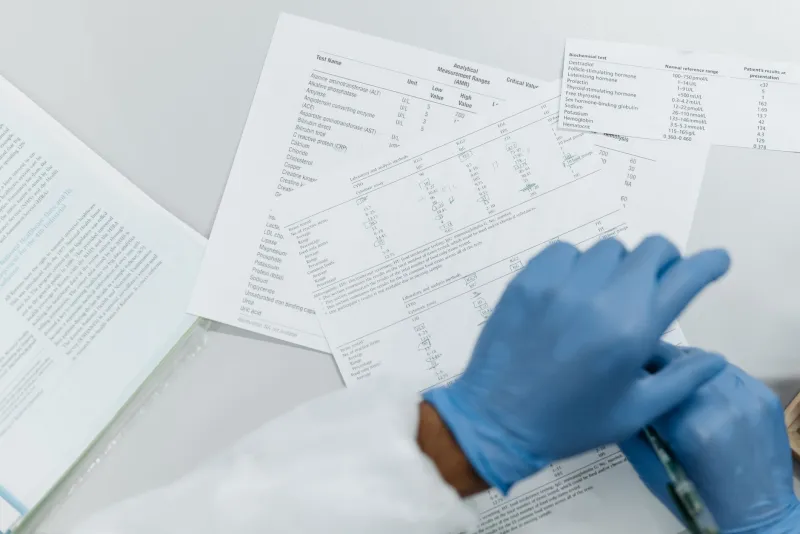
Electronic health records and patient portals did the rest. By the mid-2010s, major health systems were pushing results into apps and online dashboards within hours of processing. Quest Diagnostics and LabCorp built consumer-facing platforms that sent push notifications when your panel was ready. Suddenly, the same cholesterol numbers that once arrived as a vague verbal summary were sitting on your phone screen — with reference ranges, trend lines, and flagged values highlighted in red.
 Photo: Quest Diagnostics, via www.marketbeat.com
Same-Day Results and the Rise of Retail Testing
The shift didn't stop at hospital systems. The last decade brought an entirely new category: direct-to-consumer lab testing. Companies like Everlywell allowed Americans to order a blood panel online, collect a sample at home, and receive results within days — no doctor's order required. Retail pharmacy chains partnered with lab networks to offer walk-in testing at strip mall locations. Some urgent care clinics began advertising same-day results for routine panels as a competitive differentiator.
The COVID-19 pandemic supercharged this trend. As Americans grew comfortable with at-home testing for one condition, the infrastructure and appetite for broader self-directed diagnostics expanded rapidly. The concept of waiting a week for a blood result began to feel as antiquated as waiting a week for a photograph to be developed.
When Speed Outruns Understanding
Here's the part nobody really talks about: knowing your numbers and understanding your numbers are two completely different things.
When your doctor's receptionist called to say everything looked fine, you trusted the interpretation because you had no choice. Now you're staring at a hemoglobin A1C of 5.8 at 11pm on a Tuesday, running it through a Google search, and spiraling into a self-diagnosis before you've had a chance to talk to anyone with a medical degree.
Clinicians have noticed. The same patient portals designed to increase transparency have generated a wave of after-hours anxiety calls, urgent appointment requests, and — in some cases — genuine harm from misread results. A flagged value that a physician would contextualize in thirty seconds can feel catastrophic when encountered alone on a screen with no guidance attached.
There's also the question of what we do with the information. Studies consistently show that Americans are aware of key health markers like cholesterol and blood sugar at higher rates than ever before — and yet chronic disease rates tied to those exact markers continue to climb. Access to data, it turns out, doesn't automatically produce behavioral change.
What Was Gained, What Was Lost
The old system had real failures. Delayed results meant delayed diagnoses. Patients who might have caught a developing condition early were kept in the dark for days that sometimes mattered. People in rural areas, without easy access to hospital labs, faced even longer waits. The opacity wasn't just inconvenient — it was occasionally dangerous.
But there was something the old system got right almost by accident: it forced a conversation. When your doctor called to discuss your results, you got context, nuance, and a human being who knew your history. That conversation doesn't happen as often anymore. Results arrive in an app, you either feel reassured or alarmed, and the follow-up appointment — if it happens at all — may come weeks later.
The remarkable thing about modern diagnostic medicine isn't just the speed. It's how completely the relationship between patients and their own health data has been rewritten in less than a generation. Your grandparents were told what their bodies were doing. You can now watch it in near real time.
The question worth asking is whether we've built the wisdom to match the technology — or whether we're still catching up.