You Could Borrow His Ladder Without Downloading an App: The Neighborhood Economy That Quietly Vanished
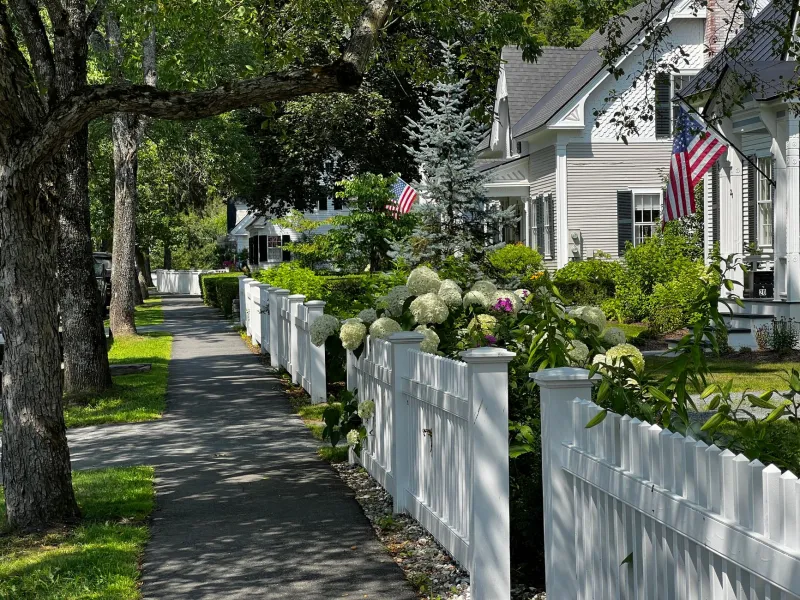
Somewhere in a suburb outside of Columbus or Sacramento or Charlotte, sometime in the 1960s, a man walked across his lawn, knocked on his neighbor's side door, and asked if he could borrow the extension ladder for the weekend. The neighbor said sure, told him where it was in the garage, and went back inside. No deposit. No contract. No app notification. No review left afterward rating the borrowing experience.
The ladder came back on Sunday. The favor was remembered, filed somewhere in the informal ledger that neighbors kept in their heads, and eventually returned in some other form — a bag of tomatoes from the garden, a jump-start on a January morning, a few hours of help moving furniture.
This was not a quaint exception. This was how a significant portion of everyday American economic life actually functioned for decades.
The Invisible Infrastructure of Postwar Neighborhoods
In the years following World War II, American suburbs weren't just places where people lived near each other. They were functioning informal economies built on proximity and trust. Homeowners accumulated tools — the kind you needed occasionally but not constantly. A tile saw. A pressure washer. A good pipe wrench. A cement mixer used for one weekend project and then stored for the next decade.
These items circulated. Not through any organized system, but through the organic web of relationships that formed when people lived in the same place long enough to know each other's names, their kids' names, and what kind of car they drove.
Sociologists who study this period describe it as a "gift economy" operating alongside the formal one — a web of reciprocal exchanges that had no price tags but enormous social value. It reduced costs for everyone involved, created repeated contact between neighbors, and built what researchers now call "social capital": the accumulated trust and goodwill that makes communities function smoothly.
Why It Worked
The informal borrowing economy depended on a few conditions that existed in postwar America and have since eroded considerably.
First, stability. People stayed. The average American family in the 1950s and 1960s lived in the same home for much longer than families do today. When you know you'll be living next to someone for twenty years, the informal ledger of favors and obligations makes sense. Cheating someone out of a returned tool has long-term social costs in a stable community.
Second, density of need. Everyone was doing roughly similar things — maintaining houses, raising kids, managing yards — which meant the same tools were useful to everyone, and the opportunities to reciprocate were plentiful.
Third, and perhaps most importantly, time. People had enough unscheduled time to actually walk across the lawn and knock on a door. The casual conversation that happened while picking up the ladder — that five-minute exchange about the weekend project, the neighborhood news, the shared complaint about the city's new road construction — was the social glue. It wasn't inefficiency. It was the whole point.
The Forces That Dismantled It
The informal neighborhood economy didn't collapse all at once. It eroded through a combination of forces, each one reasonable in isolation.
Mobility increased. The average American now moves more than eleven times in their lifetime. You don't build a multi-year favor relationship with someone you've known for eight months and will probably be gone before the year is out.
Suburban design changed. Attached garages replaced front porches. Fenced backyards replaced shared green spaces. The physical layout of American neighborhoods quietly reduced the accidental contact that made informal relationships possible. You can live next to someone for three years and never learn their last name if the design of the street doesn't require you to meet.
Then came the professionalization of everything. Services that neighbors once provided for each other — childcare, lawn work, minor repairs, pet sitting — became formal industries with insurance, liability, and invoices. Somewhere along the way, the informal arrangement started to feel legally risky, or socially awkward, or simply unnecessary when a professional could be hired instead.
And finally, the apps arrived and offered a sleek, transactional version of sharing that removed all the social friction — and all the social benefit. You can rent a power drill from a stranger through an app today without ever meeting them, speaking to them, or remembering their name tomorrow. It's efficient. It's also completely hollow.
What the Ledger Actually Contained
The real loss isn't the ladder or the tile saw. It's what the borrowing was doing underneath the surface.
Every exchange in the informal neighborhood economy was also a social interaction — a thread being added to a web of relationship. Over years, those threads accumulated into something substantial: a network of people who knew each other well enough to notice when something was wrong, to help without being asked, to show up. The kind of community that, when a family hit a crisis, responded before anyone had to organize a fundraiser.
Research on social isolation in America consistently points to the collapse of exactly these kinds of casual, repeated, low-stakes interactions as a primary driver of the loneliness epidemic. We didn't lose neighbors. We lost the reasons to keep running into them.
The Tool Library Trying to Bring It Back
In dozens of American cities, there are now community tool libraries — physical spaces where neighbors can borrow equipment for free, run on trust and volunteer labor. They are, almost exactly, a formalized version of what used to happen informally across back fences.
The fact that we need an institution to replicate what once happened naturally says something important about how much has changed.
The neighbor with the ladder wasn't just being neighborly. He was participating in a system that made his street function, that made his community resilient, that made his daily life cheaper and richer at the same time. He probably didn't think about it in those terms.
He just knew where the ladder was kept, and that returning it promptly was the kind of thing you did.