The Empty Afternoon That Used to Build Something in You
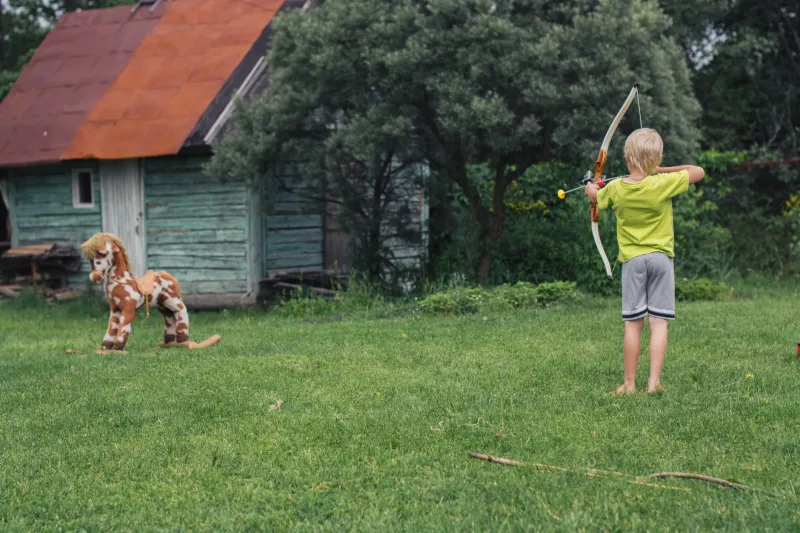
It's a Saturday afternoon sometime in the mid-1970s. School is out. There's nothing on TV until 4 o'clock, and even then it's a show you've already seen. Your friends are around, or maybe they're not. The backyard is just a backyard. The neighborhood is quiet.
You are bored.
Not the mild, vaguely restless boredom of waiting for a page to load. Real boredom. The wide, featureless kind that stretches out in every direction without offering anything obvious to grab onto. The kind that, if you sat with it long enough, started to get a little uncomfortable.
And then, eventually, something happened. Not because anyone scheduled it or handed you a device. Something happened because your brain, left alone with nothing to do, started doing something.
What Boredom Actually Was
For most of human history — and certainly for most of the twentieth century in America — boredom was simply the default condition of large portions of daily life. Not every hour, but many of them. Waiting rooms without phones. Car rides without entertainment systems. Summer afternoons with no plan and no structure.
Children, in particular, experienced enormous quantities of unscheduled time. The expectation was that they would fill it themselves. And they did — with elaborate games that required negotiation and rule-making, with construction projects using whatever happened to be in the garage, with stories invented on the spot and performed for no audience, with hours of aimless exploration that wasn't going anywhere in particular.
This wasn't considered a feature of childhood. It was just childhood. Nobody called it "unstructured play" because there wasn't another kind to contrast it with.
The Science That Came After the Fact
Researchers only started studying what boredom was actually doing to the developing brain once it started disappearing. What they found was striking.
Boredom, it turns out, activates what neuroscientists call the default mode network — the part of the brain that handles daydreaming, self-reflection, imaginative thinking, and the processing of complex emotions. When children are constantly stimulated, this network doesn't get the activation time it needs. The mental equivalent of a muscle goes unexercised.
Studies have linked regular unstructured time to stronger creative problem-solving, better emotional regulation, and a more developed sense of self-directed motivation — the ability to decide what you want to do and pursue it without external prompting. These are not minor skills. They're foundational ones.
Dr. Stuart Brown, a researcher who spent decades studying play, found that the free-form, self-directed play of mid-century childhoods was doing cognitive and emotional work that no structured activity — however enriching — could fully replicate. The key ingredient wasn't the fort or the game. It was the absence of instruction.
What Replaced It
The shift didn't begin with smartphones. It started earlier, with the rise of structured after-school activities in the 1980s and 1990s. Soccer leagues, piano lessons, enrichment programs, organized playdates. Well-intentioned parents, increasingly aware of competition and college applications, began filling the empty hours with resume-building experiences.
Then screens arrived and made the whole question moot. Why negotiate the rules of a backyard game when a game with pre-set rules was available immediately? Why stare at the ceiling until something interesting occurred to you when something interesting was always one tap away?
The average American child today spends somewhere between five and eight hours a day in front of screens. Unstructured outdoor time has dropped dramatically since the 1980s. Many children report feeling uncomfortable or anxious when there's "nothing to do" — a sensation their grandparents would have recognized as the beginning of something, not a problem requiring a fix.
The Adults Forgot Too
It's easy to frame this as a children's issue. But adults lost something here too.
The commute that used to be twenty minutes of staring out a train window — thinking, noticing, processing the day — is now twenty minutes of scrolling. The waiting room. The line at the grocery store. The few minutes before sleep. Every pocket of empty time that used to be quietly generative has been colonized by content.
Many adults report that their best ideas used to come in the shower — one of the last remaining stimulus-free zones in modern life. That's not a coincidence. It's the default mode network doing what it does when nothing else is competing for its attention.
What Getting Bored Again Might Give You
There's a small but growing movement among parents, educators, and researchers pushing back on the constant stimulation model. Some schools have introduced "free play" periods with no equipment and no structure. Some parents are experimenting with screen-free afternoons and reporting — after an initial adjustment period involving considerable protest — that their kids eventually start doing exactly what kids in 1974 did. They figure something out.
For adults, the prescription is simpler and harder: put the phone down. Sit with the discomfort of having nothing to look at. Wait for what happens next inside your own head.
Your grandparents didn't have a word for what they were doing on those long, slow Saturday afternoons. They weren't practicing mindfulness or protecting their default mode network. They were just bored.
And something was being built in them the whole time.