The Fish Tank, the Faded Magazines, and the Long Wait Nobody Planned For

Photo: ILN correspondent, Public domain, via Wikimedia Commons
There's a particular kind of waiting room that exists in the American memory. A small, slightly too-warm room. A fish tank in the corner, bubbling quietly. A stack of magazines with the address labels torn off. A receptionist who looked up when you walked in and said your name before you opened your mouth.
That version of the doctor's office is mostly gone now. And if you're under thirty-five, you may never have experienced it at all.
When the Doctor's Office Was Still Small
Through the 1960s, 70s, and well into the 80s, most Americans received primary care from solo practitioners or small group practices. Your doctor often owned the building, employed a small staff, and saw a manageable number of patients each day. The waiting room reflected that scale — a dozen chairs, maybe two or three people ahead of you, and a receptionist who had probably worked there for fifteen years.
You called in the morning and often got an appointment that afternoon. If you'd been a patient for years, the front desk recognized your voice on the phone. There was no insurance pre-authorization to clear before the doctor could order a basic test. You checked in by saying hello, not by tapping through a touchscreen.
Waits existed, of course. Doctors ran behind. Emergencies happened. But the expectation — the reasonable, usually accurate expectation — was that you'd be in and out in under an hour. Medical care felt like an errand, not an ordeal.
The System Grew, and the Experience Shrank
The consolidation of American healthcare didn't happen overnight, but its effects on the patient experience were profound. Starting in the 1990s and accelerating sharply through the 2000s and 2010s, independent practices were absorbed into larger health systems and corporate medical groups. The solo practitioner became a relic. The small waiting room became a lobby.
Insurance complexity grew in parallel. What once required a quick phone call to confirm coverage became a multi-step verification process involving prior authorizations, referral requirements, and billing codes that neither patients nor doctors fully understood. That complexity had to live somewhere — and it landed squarely on the check-in experience.
Today, arriving at a medical appointment often means navigating a process that would have baffled a patient from 1975. You may check in on a tablet. You'll likely confirm your insurance three times — on the phone when you booked, online the night before, and again at the front desk. You'll be handed a clipboard with forms asking questions your chart should already answer. And then you'll wait.
What the Wait Actually Costs
The numbers are striking. A 2023 survey by Kyruus Health found that American patients wait an average of 26 days to see a primary care physician for a new appointment. Once you're in the building, additional waits of 20 to 45 minutes in the waiting room before being called back are routine. Some patients report total appointment times — door to door — exceeding two hours for what amounts to a fifteen-minute consultation.
 Photo: Kyruus Health, via mma.prnewswire.com
That math would have seemed absurd to a patient in 1968. Back then, the average primary care physician saw fewer patients per day and spent more time with each one. The business pressure to maximize patient volume simply wasn't the same.
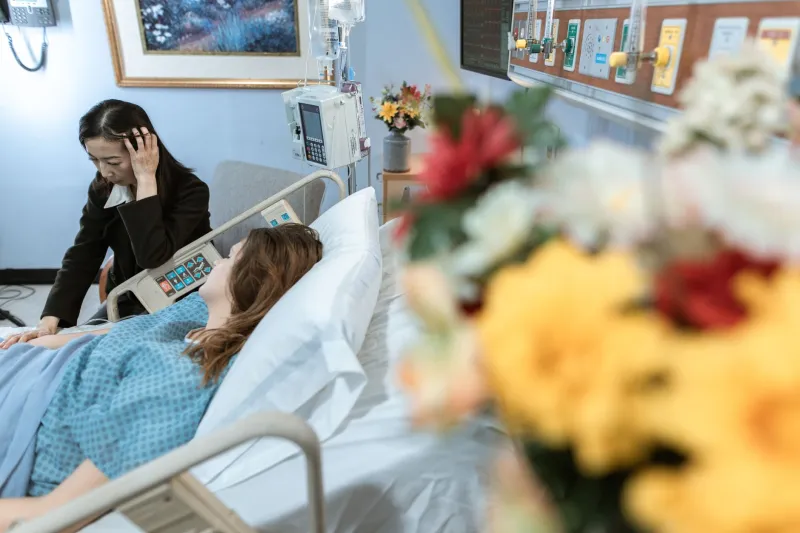
The physical environment has changed too, and not always for the better. Large health system waiting rooms can feel closer to a regional airport terminal than a place of care. Rows of identical chairs. Numbered ticket systems. TV screens cycling through health tips nobody asked for. The intimacy of the old-style practice — the thing that made you feel like a person rather than an appointment slot — has been engineered out in the name of efficiency.
The Emotional Shift Nobody Measured
What's harder to quantify, but just as real, is what all of this has done to how Americans feel about going to the doctor.
Research consistently shows that healthcare avoidance is a serious public health problem in the United States. While cost is the primary driver, the experience of seeking care plays a documented role. Long waits, impersonal intake processes, and the sense that your time doesn't matter to the system contribute to people delaying or skipping care they actually need.
 Photo: United States, via www.mappery.com
There's also an anxiety dimension that didn't used to be part of the equation. Walking into a familiar small practice with staff who knew you was fundamentally different from walking into a busy health system lobby, uncertain whether your insurance will clear, whether you'll see the same provider you saw last time, or whether the whole visit will consume your entire afternoon.
The fish tank in the corner was never just decoration. It was a signal — quiet, gentle, a little dorky — that this was a place designed to make you feel at ease. The fact that we notice its absence says something about what we've traded away.
Something Worth Recovering
None of this means modern medicine is worse than it was. In most measurable clinical ways, it's dramatically better. Diagnostics are sharper. Treatments are more effective. The things that could kill you in 1975 are often manageable today.
But clinical outcomes and patient experience are two different things. And somewhere in the drive toward scale, efficiency, and system integration, the experience of being cared for got quietly left behind.
A handful of practices — concierge medicine, direct primary care models, federally qualified health centers — are trying to recover something of that older dynamic. Smaller panels of patients. Longer appointments. Staff who actually know your name.
It turns out what people miss about the old waiting room wasn't the outdated magazines or the slightly too-warm room. It was the feeling that someone on the other side of that desk was genuinely glad you showed up.