The Good Death We Traded Away: How Modern Medicine Transformed Dying Into a Medical Event
In 1900, roughly 85 percent of Americans died at home. The deathbed was a domestic institution — a familiar space where the dying person held court, said their goodbyes, distributed their final instructions, and slipped away surrounded by the people who had built a life alongside them. Neighbors came. Children were present. Death was woven into the fabric of ordinary life, visible and acknowledged.
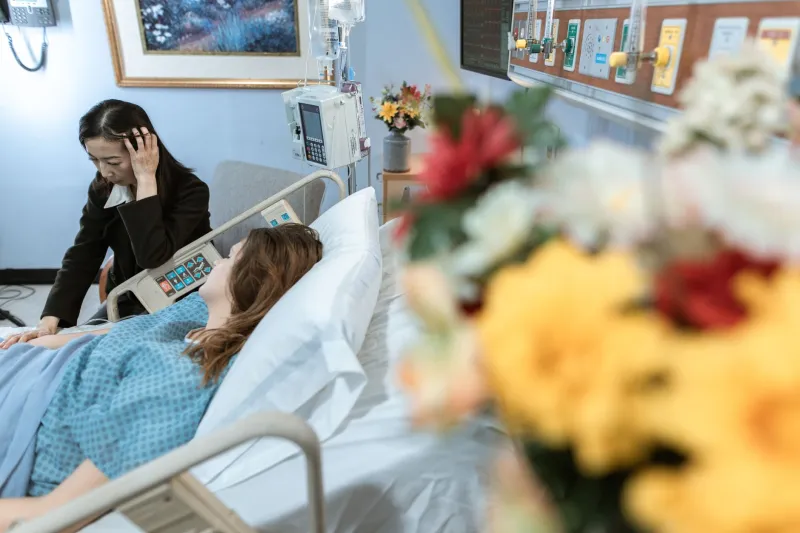
Today, that scene is almost unrecognizable. Most Americans now die in hospitals or institutional care settings, often connected to monitoring equipment, often sedated, often surrounded not by family but by medical professionals doing everything in their power to push the moment further away. We got enormously good at not dying. The question we forgot to ask was what we were getting in exchange.
When Dying Was a Community Event
The home death of the early 20th century wasn't romanticized at the time — it was simply how things worked. Physicians had limited tools and made house calls more out of practicality than philosophy. When a person was clearly dying, the medical goal shifted from cure to comfort. The family took over. Neighbors rotated through. Local women with experience in laying out the dead came when the time arrived.
It was intimate, sometimes brutal, and deeply human. People witnessed death regularly. Children understood it as something that happened to bodies, not something that happened offstage in a building with restricted visiting hours.
The dying person typically retained some degree of agency. They knew where they were. They recognized the faces around them. They could speak — or choose silence. The concept of a "good death" was understood by ordinary people as something achievable: peaceful, at home, with dignity intact and goodbyes properly said.
The Hospital Takes Over
The mid-20th century changed everything. Antibiotics, surgical advances, and the rapid expansion of hospital infrastructure meant that conditions once considered terminal became treatable. Deaths that would have been inevitable in 1930 were survivable by 1960. The hospital transformed from a place where the poor went to die into the place where everyone went to get better.
And it worked. Dramatically. Life expectancy climbed. Infant mortality plummeted. Heart attack survival rates improved beyond anything previous generations could have imagined. The medical system earned its authority over life and death by genuinely delivering on the promise of more life.
But the tools built to extend life were never designed with dying in mind. As hospitals became the default setting for medical crisis, they became the default setting for death — even when death was no longer a crisis to be averted but a natural conclusion to be managed with grace.
The ICU at the End of the World
By the late 20th century, the medicalization of dying had reached its logical extreme. Americans were spending their final days in intensive care units — some of the most technologically sophisticated, emotionally sterile environments ever created. Ventilators breathed for people who could no longer breathe. Feeding tubes sustained patients who had stopped eating. Cardiac monitors beeped through the night in rooms where family members slept in chairs, if they were allowed to stay at all.
Studies began documenting what patients and families already sensed: that aggressive end-of-life intervention often prolonged suffering rather than life in any meaningful sense. A landmark 1995 study called SUPPORT found that half of conscious patients who died in hospitals spent their final days in moderate to severe pain. Many had expressed preferences for limited intervention that were never honored.
The system wasn't malicious. It was doing what it was built to do — treat, intervene, extend. Nobody had designed a protocol for stepping back.
The Hospice Countermovement
Hospice care — which prioritizes comfort and quality of life over curative treatment — has grown significantly since Medicare began covering it in 1982. Today, roughly half of Americans who die use hospice services at some point, often in the final weeks of life. That's genuine progress.
But the median hospice enrollment in the US is still only around 18 days. Most people arrive at hospice far later than they would choose if they fully understood their options — often transferred from hospitals after aggressive intervention has already taken its toll. The conversation about dying, when it happens at all, tends to happen late, in crisis, in hallways, between people who have just met.
End-of-life planning documents — living wills, advance directives, do-not-resuscitate orders — exist precisely to restore some of the personal agency that the medicalized death stripped away. Yet surveys consistently show that fewer than a third of Americans have completed them.
What a Good Death Looks Like Now
The tradeoff modern medicine made is uncomfortable to name directly: we extended the quantity of life at the cost of controlling its ending. The average American now lives decades longer than their great-grandparents. That is an extraordinary achievement. But the final chapter of that longer life is often written by machines and institutional protocols rather than personal choice.
There are signs of change. The palliative care movement has grown substantially. More physicians are trained in end-of-life conversations. Some states have passed medical aid-in-dying laws that return a measure of control to the individual. The cultural conversation about death has opened up — slowly, awkwardly, but genuinely.
What hasn't changed is the underlying tension. A medical system built on intervention struggles philosophically with the idea that the best thing it can sometimes do is less. And a culture that treats death as a failure rather than a certainty finds it nearly impossible to plan for dying the way previous generations planned for it — as something that deserved care, preparation, and presence.
The deathbed hasn't disappeared. It just moved somewhere most of us will never get to choose.