The Living Room Wake That Brought the Whole Street Together
When Death Happened at Home
Mrs. Eleanor Patterson died on a Tuesday morning in 1943, and by noon, her neighbors had already started arriving. Not with flowers for a funeral home, but with covered dishes for her kitchen. Her body would remain in the front parlor of her Cleveland home for three days while the entire block cycled through, paying respects, telling stories, and making sure her family never sat alone with their grief.
This wasn't unusual. It was Tuesday.
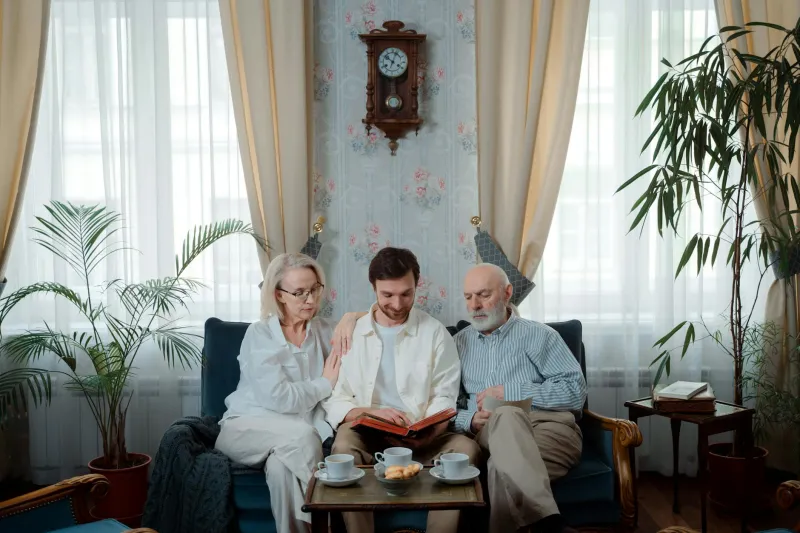
For most of American history, death happened where life happened—at home. Families washed and dressed their own dead, built or bought simple wooden coffins, and opened their doors to a community that understood grief as a collective responsibility. The neighborhood women would organize meals that lasted for weeks. Men would dig the grave and carry the coffin. Children would play quietly in the yard while adults shared memories that kept the deceased alive in story.
The Professionalization of Goodbye
Today, death is a $20 billion industry managed by professionals who have never met your family. The average American funeral costs more than most people's monthly salary, and the entire process—from death to burial—can be completed in under a week. Often in under 72 hours.
When someone dies now, we call the funeral home. They handle everything: transportation, preparation, scheduling, flowers, music, even the guest book. Families choose from packages like they're planning a wedding, not saying goodbye to a lifetime of love. The viewing lasts two hours. The service runs exactly sixty minutes. The reception ends when the hall rental expires.
Grief, once measured in seasons, is now scheduled in segments.
What We Lost in the Translation
The old way wasn't just different—it was therapeutic in ways we're only now beginning to understand. Psychologists have spent decades studying what happens when communities grieve together versus when families grieve alone. The research is clear: collective mourning helps people process loss more completely and recover more fully.
When neighbors took turns sitting with the body, they weren't just being polite. They were creating space for stories to emerge naturally, for laughter to break through tears, for the deceased to remain present in conversation rather than becoming immediately absent from life. The three-day wake allowed for the shock to wear off, for the reality to settle in gradually, for the community to reorganize itself around the loss.
Modern grief counseling tries to recreate what used to happen automatically in American living rooms.
The Economics of Sorrow
The funeral industry grew powerful by solving a problem that didn't really exist. They convinced families that proper respect for the dead required professional services, expensive caskets, and elaborate ceremonies. What started as a convenience during the Civil War—when families couldn't travel to retrieve bodies—became a necessity that few questioned.
 Photo: Civil War, via coins54.ru
By the 1960s, the front parlor wake had largely disappeared. Funeral homes had become the default, and with them came costs that previous generations never imagined. Embalming, once reserved for long-distance transport, became standard practice. Simple wooden boxes gave way to steel caskets with silk interiors. Flowers that neighbors once picked from their gardens became arrangements that cost hundreds of dollars.
The average American funeral now costs more than the average American has in savings.
The Neighborhood That Knew How to Mourn
In 1940s America, death was still part of life in ways that made grieving feel natural rather than clinical. Children grew up seeing death as sad but normal, not as a medical failure to be hidden away. They learned how to comfort adults, how to sit quietly with sorrow, how to help in small ways that mattered enormously.
The neighborhood network that activated during a death was the same network that helped during illness, celebrated during weddings, and supported during hard times. Death wasn't an isolated tragedy—it was a community experience that strengthened bonds rather than breaking them.
Families kept photo albums of the deceased in their caskets, not because they were morbid, but because death was part of the family story. Children were expected to kiss their grandmother goodbye, to understand that bodies stop working but love doesn't.
What Modern Grief Looks Like
Today's families often feel lost in their grief because they're literally alone with it. Extended families live in different states. Neighbors don't know each other's names, let alone their sorrows. The funeral industry provides efficiency, but efficiency isn't what grief needs.
Social media has become our front parlor, where we post memories and receive digital casseroles in the form of heart emojis and brief comments. But scrolling through condolences doesn't replace sitting together in silence, sharing stories that go on for hours, or having someone show up at your door with dinner every night for a month.
The result is a generation of Americans who don't know how to grieve well because they've never seen it done in community. We've outsourced death to professionals and wonder why it feels so lonely.
The Cost of Convenience
The professionalization of death promised to make loss easier, but it may have made it harder. When families handled their own dead, death felt final but not foreign. When neighbors shared the burden of grief, sorrow felt heavy but not impossible.
Now we have grief counselors trying to teach what grandmothers once knew instinctively: that mourning takes time, that stories heal, that community matters more than ceremony, and that the best way to honor the dead is to keep them alive in the conversations of the living.
Mrs. Patterson's neighbors understood something we've forgotten: death isn't a problem to be solved by professionals. It's a reality to be faced by people who care about each other. The living room wake wasn't just about saying goodbye—it was about learning how to go on living together.