The Garden Hose Was Good Enough: How America Turned Kids' Hydration Into a Parenting Statement
The Garden Hose Was Good Enough: How America Turned Kids' Hydration Into a Parenting Statement
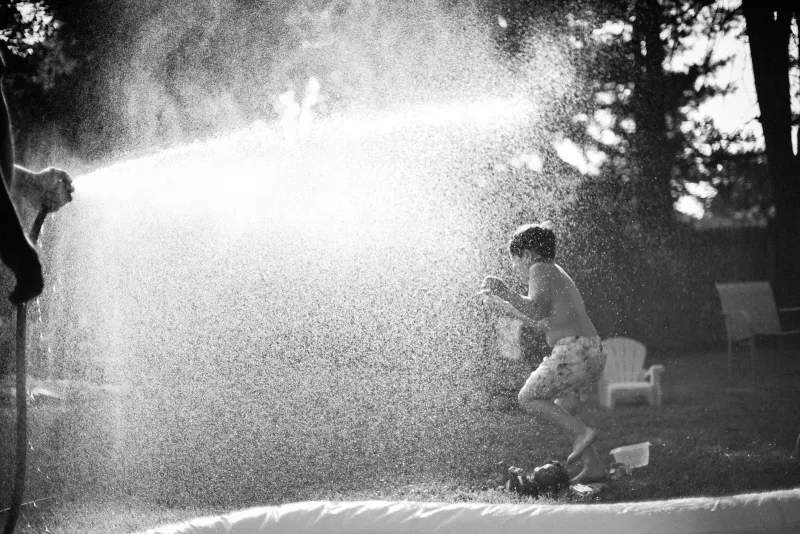
If you grew up in America before the 1990s, you drank from the garden hose. Not occasionally, not reluctantly — enthusiastically, because it was hot and the hose was right there and nobody thought twice about it. You cupped your hands under a gas station bathroom faucet. You drank from the water fountain at the park, the one with the perpetually warm trickle that tasted faintly of metal. You survived.
Today, that same approach would earn a parent a raised eyebrow at the school pickup line and possibly a concerned comment from someone's pediatrician. The American child of 2024 arrives at summer camp with a stainless steel water bottle, possibly filtered, probably labeled with their name in vinyl lettering, and sometimes paired with an app their parents use to track whether they've hit their daily fluid intake goals.
Something genuinely changed. And something else got very, very strange.
What the Hose Actually Contained
Let's be honest about the garden hose before we get too nostalgic. Standard garden hoses manufactured before the mid-2000s often contained lead, bromine, and BPA — chemicals that leached into the water sitting in the hose on a hot summer afternoon. The water itself, drawn from municipal supplies, was treated but not always consistently safe, particularly in older neighborhoods with aging lead pipes. Kids drank from hoses that were, by current standards, genuinely problematic.
The Flint, Michigan water crisis — which began in 2014 and exposed thousands of children to dangerous lead levels — wasn't an anomaly so much as a spotlight. Lead contamination in drinking water infrastructure is a documented, ongoing problem across hundreds of American cities. The concern that parents feel about what their children are drinking isn't invented. It reflects a real and legitimate understanding of what was hiding in plain sight for decades.
 Photo: Flint, Michigan, via static3.businessinsider.com
So the first thing to acknowledge is that some of what looks like modern parenting anxiety is actually modern parenting information. We know more now. Knowing more changes behavior, and not always irrationally.
Where the Science Ends and the Marketing Begins
Here's where things get complicated. The legitimate concern about water safety — lead pipes, municipal contamination, hose materials — has been skillfully expanded by an industry that profits enormously from parental worry.
The children's water bottle market in the US is now worth billions. Brands compete not just on filtration capability or durability but on color options, character licensing, motivational time markers, and social signaling. A child's water bottle has become a consumer object in the same way a child's sneaker became a consumer object — something that communicates values, effort, and identity.
Hydration tracking apps for kids exist. So do "hydration coaches" marketed to youth sports programs. Bottled water brands have launched children's lines with smaller bottle sizes and cartoon branding, despite the fact that filtered tap water is chemically identical to most bottled water and generates a fraction of the plastic waste.
The messaging that surrounds all of this — that children are chronically under-hydrated, that mild thirst is dangerous, that parents who aren't actively monitoring fluid intake are somehow negligent — is not supported by pediatric science. The American Academy of Pediatrics does not recommend hydration tracking apps for healthy children. Thirst remains a reliable indicator of when a child needs water. The body has been managing this since before anyone thought to sell it a stainless steel vessel.
 Photo: American Academy of Pediatrics, via assets.medpagetoday.net
The Parenting Performance Problem
There's a social dimension to the children's hydration industry that goes beyond health claims. The branded water bottle — like the organic lunchbox, the sunscreen with the clean ingredient list, the allergen-free snack — has become a signal. It communicates that a parent is paying attention, making good choices, doing the work.
In environments where parenting is increasingly performed as much as practiced, the visible artifact of good hydration habits carries social weight that has nothing to do with whether a child is actually better hydrated. A kid drinking filtered water from a $40 bottle and a kid drinking tap water from a reusable cup are receiving essentially the same hydration. Only one of their parents is making a statement.
This isn't unique to water. It's a pattern that runs through contemporary American parenting culture — the conversion of ordinary child-rearing tasks into opportunities for consumer differentiation. The garden hose generation's parents didn't think about hydration as a parenting category. It simply wasn't one. Water came from the tap or the hose or the fountain, and children drank it when they were thirsty.
What Actually Changed, and What Didn't
Here's the honest summary: American tap water is, in most places, safer today than it was in 1975 — better regulated, more consistently tested, more transparently reported. The genuine risks that remain, particularly in communities with older infrastructure, deserve serious attention and public investment, not a product launch.
Children's hydration needs haven't changed. A healthy child doing normal summer activities needs water, access to shade, and the instinct to drink when thirsty — all things that have been available for free for the entirety of human existence.
What changed is the commercial opportunity created by the gap between legitimate safety awareness and the fear that awareness can generate when it's properly amplified. The industry didn't create the concern. It just found it, measured it, and built a product line around it.
The garden hose wasn't perfect. Neither is the $40 water bottle with the motivational ounce markers. Somewhere between the two is a child who's just thirsty and would like a drink of water without it being a whole thing.
That child, it turns out, is doing fine.