Raising Kids Used to Come With a Manual. Now It Comes With Ten Thousand Contradicting Ones.
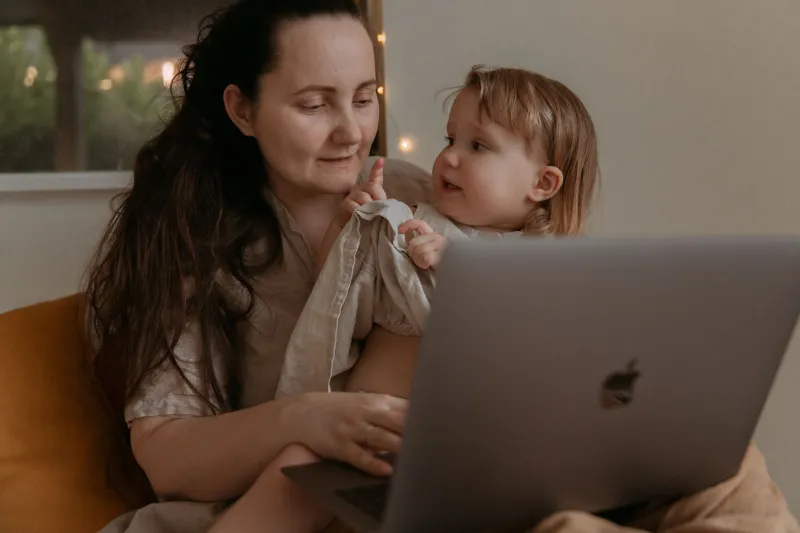
Somewhere in America right now, a new parent is awake at 2 a.m., phone in hand, reading a Reddit thread about whether the specific brand of formula they chose could affect their child's gut microbiome development. They're not doing this because they're irresponsible. They're doing it because the information exists, and when information exists, modern parenting culture insists that a good parent will have read it.
This is new. And it's worth asking whether it's actually helping.
When the Pediatrician Had the Final Word
Parenting in the 1960s, 70s, and into the 80s operated on a fundamentally different model. Advice came from a small number of trusted sources: your own mother, maybe a neighbor with older kids, and the family pediatrician who had been seeing children in your town for twenty years and had opinions delivered with calm authority.
Dr. Benjamin Spock's Baby and Child Care — first published in 1946 and revised periodically — was the dominant parenting text for decades. One book. Millions of families. The opening line of the first edition remains famous: "Trust yourself. You know more than you think you do." It was advice calibrated for a world where parents weren't drowning in competing frameworks.
The pediatric appointment of that era was a different kind of encounter. A doctor checked the basics — weight, height, milestones, vaccinations — asked a few questions, and sent you home with simple, clear guidance. Parents generally followed it. Not because they were less intelligent or less devoted, but because there wasn't a parallel track of blog posts and Facebook groups and influencer content suggesting that the doctor might be wrong.
Children grew up, mostly fine. Mistakes were made, learned from, and forgotten. Parenting was hard, but it wasn't a performance.
The Information Flood That Changed Everything
The internet didn't just give parents more information. It restructured the entire social architecture of how parenting knowledge moves. Before the web, advice spread slowly — neighborhood to neighborhood, generation to generation, filtered through lived experience. After the web, and especially after social media, it arrived in an undifferentiated torrent with no reliable hierarchy.
By the mid-2010s, a parent seeking guidance on sleep training could find peer-reviewed research, a mommy blogger's personal account, a pediatric sleep consultant's $300 course, a viral Twitter thread arguing that all sleep training causes attachment trauma, and a counter-thread arguing the opposite — all within fifteen minutes. None of these sources came with a credibility label. All of them spoke with conviction.
The result isn't a more informed parent. It's a more uncertain one. When every decision has a vocal opposing camp, the act of making any decision starts to feel like a gamble. And the stakes, as presented by the most alarming corners of parenting content, are always enormous: your child's brain development, their emotional security, their long-term relationship with food, their future capacity for intimacy. The weight of it is crushing.
Comparison Culture and the Performance of Good Parenting
Social media added a dimension that pure information overload alone couldn't produce: visibility. Parenting, which had always been an intensely private daily grind, became something that happened in public — documented, filtered, and implicitly evaluated.
The curated family Instagram account is one version of this. But the more insidious version is subtler: the group chat where someone mentions their three-year-old is already reading, the pediatric waiting room conversation about enrichment classes, the casual remark at a birthday party that lands like a judgment. When parenting is visible, it becomes comparative. When it's comparative, it becomes competitive. And when it's competitive, anxiety is the only logical outcome.
Researchers studying parental anxiety have found that access to more information correlates not with reduced worry but with increased worry — particularly among college-educated parents who are most likely to seek out and engage with expert content. The more you know about everything that could go wrong, the harder it becomes to feel confident that things are going right.
What We Traded When We Left the Village Behind
There's a structural shift underneath all of this that the information problem alone doesn't explain. Parenting in earlier generations happened inside communities. Extended family nearby. Neighbors who knew your kids by name. A church, a block, a school that provided context and continuity. That web of relationships meant you were never entirely alone with a parenting decision. Someone who had done this before was usually within walking distance.
That infrastructure has largely dissolved. Americans move more frequently, live farther from extended family, and maintain shallower ties to physical communities than at almost any point in the country's history. The vacuum left by the village got filled — imperfectly, noisily — by the internet. But a Facebook group is not a grandmother. A parenting podcast is not a neighbor who watched your kid grow up.
Expert-driven parenting filled the gap with credentials and data where community once offered presence and reassurance. The exchange gave us better information about car seat installation and vaccine schedules. It also gave us a generation of parents who feel more alone in the job than any generation before them.
Getting Back to Good Enough
Pediatricians are starting to name this explicitly. Visits that once focused on physical health now frequently involve screening parents for anxiety as much as screening children for developmental concerns. The question "how are you doing?" directed at the adult in the room has become a clinical necessity.
The answer, increasingly, is: not great. Not because today's parents are weaker or less capable, but because they've been handed an impossible standard — perfect information, perfect decisions, perfect outcomes — and told that anything less reflects on their love for their child.
Dr. Spock had it right in 1946, even if he couldn't have imagined the world that would eventually prove his point. You know more than you think you do. The ten thousand contradicting manuals have made it very hard to hear that voice. But it's still there, underneath all the noise, waiting to be trusted.