Three Items in a Tin Box vs. a Cabinet That Needs Its Own Zip Code
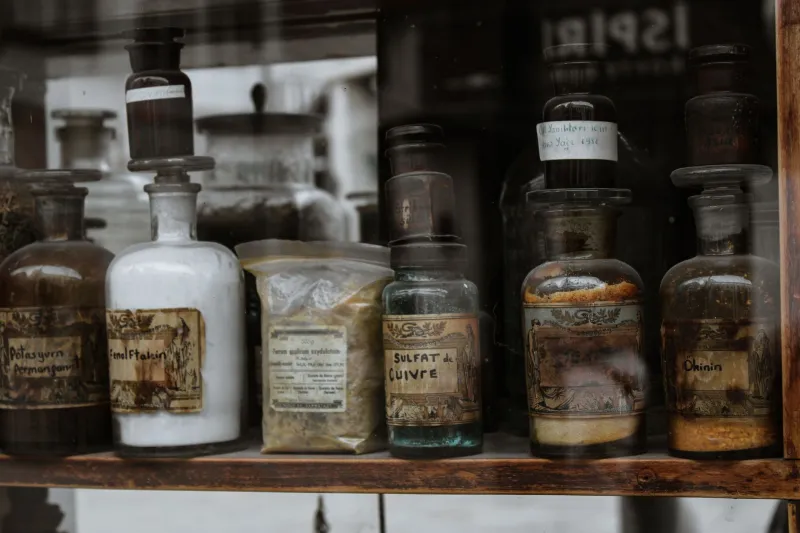
Open the medicine cabinet in most American homes today and you'll need a minute just to take it all in. There's the melatonin next to the magnesium glycinate next to the vitamin D3 next to the probiotic that came recommended by a podcast. There are three kinds of pain reliever, two brands of antacid, a tube of cortisone cream, a prescription from 2021 that probably shouldn't still be there, and something called an "immune support blend" that cost $34 and arrived in a box with very confident typography.
Your grandmother had a tin box with three things in it. Maybe four.
That's not an exaggeration. For most of the twentieth century, the average American household medicine cabinet was startlingly spare. A bottle of aspirin. A roll of gauze or a box of adhesive bandages. Some kind of antiseptic — iodine, Mercurochrome, or hydrogen peroxide. Perhaps a thermometer. That was it. That was the whole setup.
So what changed? And what does the explosion of products under the modern American bathroom sink actually tell us?
When a Little Discomfort Was Just Tuesday
The lean medicine cabinet of the mid-twentieth century wasn't a sign of neglect. It reflected something more fundamental: a different relationship with minor physical discomfort. A mild headache meant lying down for a while, not reaching for something immediately. An upset stomach meant skipping a meal or drinking ginger ale, not selecting from four competing antacid formulas. A scratchy throat in October was just a scratchy throat in October.
There was also a quiet acceptance that the body mostly sorted itself out. Not because people were tougher or less intelligent — but because the cultural script around health hadn't yet been rewritten by pharmaceutical marketing, wellness influencers, or the relentless optimization of every bodily function.
Doctors were for serious problems. Everything else was managed at home with minimal tools and a fair amount of patience.
The Marketing Machine That Changed Everything
The transformation didn't happen overnight. It accelerated in stages.
The 1980s brought direct-to-consumer pharmaceutical advertising into American living rooms in a way it had never quite been before. By the 1990s, the FDA loosened restrictions, and suddenly TV ads were telling viewers to "ask your doctor" about conditions they'd never previously thought to name. Restless legs. Acid reflux. Social anxiety disorder. These weren't invented by advertisers — but the idea that each one required a specific product, stocked in your home and ready to go, absolutely was.
Then came the supplement industry, which grew from a modest corner of health food stores into a $50 billion annual market. Vitamins became a daily ritual for millions of Americans, despite research that remains, at best, mixed on whether healthy adults actually benefit from most of them. The wellness industry followed close behind, repackaging ancient concepts like sleep and stress management as product categories requiring their own shelf space.
By the time the internet arrived and gave everyone access to symptom checkers, health forums, and influencer supplement stacks, the medicine cabinet had long since outgrown itself.
What a Fully Stocked Cabinet Actually Costs
It's not just physical space. The average American household spends significantly more on over-the-counter health products than previous generations did, and that's before factoring in the subscription supplement boxes that now arrive monthly at millions of front doors.
There's also a less obvious cost: health anxiety. Studies consistently show that the more attention people pay to their physical symptoms — especially through searching, monitoring, and pre-emptively treating — the more anxious they tend to become about their health overall. The fully stocked cabinet, intended to provide reassurance, can quietly reinforce the idea that the body is fragile and constantly at risk.
When your grandmother's tin box had three items, minor symptoms passed without becoming a diagnostic project. There was no option to cross-reference them against a supplement deficiency or a trending condition. The symptom arrived, the body dealt with it, and life continued.
The Useful Parts of the Shift
This isn't purely a story of decline. Some of what's in the modern medicine cabinet genuinely matters. Better wound care products. Improved over-the-counter allergy medications. Blood pressure monitors that can catch problems early. The ability to manage chronic conditions at home with tools that simply didn't exist before.
Preventative thinking — the instinct behind all those vitamins and wellness products — isn't wrong in principle. The research on vitamin D deficiency, for example, is real and worth taking seriously. The problem isn't that Americans are paying attention to their health. It's that the line between informed self-care and anxiety-driven consumption has become very hard to find.
What the Tin Box Knew That We've Forgotten
There's something worth recovering in the philosophy behind that spare little cabinet. Not the specific contents — modern wound care really is better than iodine — but the underlying assumption it represented. That the body is mostly competent. That not every sensation requires a product. That some discomfort is just the texture of being alive, not a problem to be solved before it fully arrives.
The modern medicine cabinet is, in many ways, a physical record of American health anxiety over the past fifty years. Every new product on that shelf has a story — a marketing campaign, a trending diagnosis, a podcast episode, a fear.
Your grandmother's tin box had a story too. It just had a lot more confidence in the ending.