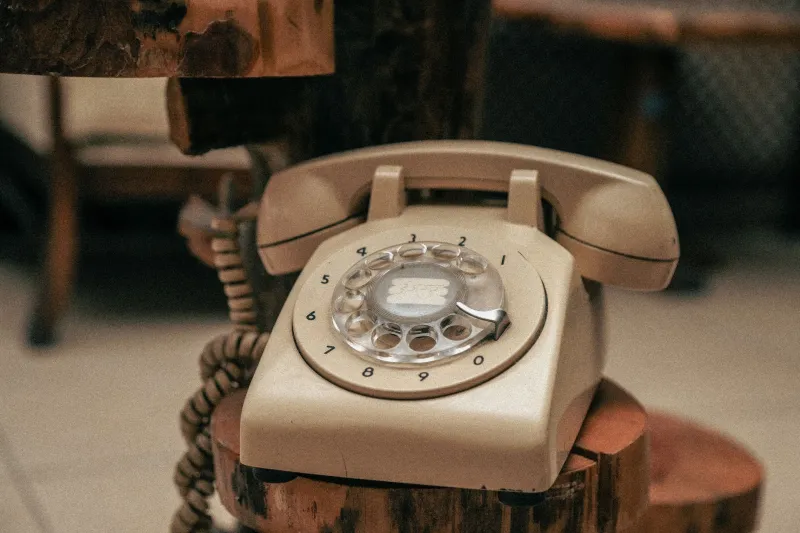
Busy Signal: Seven Small Frustrations That Used to Rule Every Phone Call
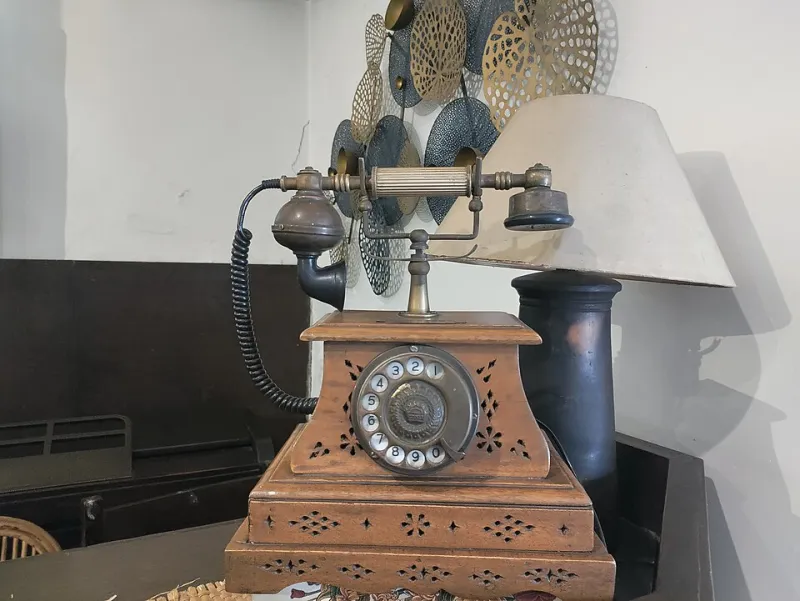
Photo: Janak Bhatta, CC BY-SA 4.0, via Wikimedia Commons
Somewhere in America right now, a teenager is learning that the phrase "hang up" refers to a physical action. It's a strange artifact of a communication world that has almost completely vanished in less than thirty years.
Reaching one specific person used to be a project. Not a tap — a project, with obstacles, delays, and genuine uncertainty about whether you'd succeed at all. Here's a tour of the small frustrations that once governed every attempt to say hello, and what their disappearance did to us.
1. The Number You Had to Know by Heart
Before phones stored contacts, your brain stored them. Most people could recite a dozen or more numbers from memory: home, work, grandparents, the neighbor, the pizza place. Children learned their own phone number before they learned to ride a bike. Losing someone's number meant asking around, calling directory assistance, or — if you were bold — looking them up in the phone book, that enormous paper directory delivered to every doorstep.
Today, most Americans couldn't recite their own partner's number under oath. The memory burden migrated from our heads to our devices, and there's no going back.
2. The Busy Signal
Dial a number in 1985 and there was a real possibility the line was in use — and that was that. No voicemail, no text, no notification. A busy signal was a wall. You'd wait a few minutes and try again, maybe repeatedly, playing a game of dial-based chance with no information about whether the other person was even home.
The busy signal is so extinct that phone interfaces no longer bother simulating it accurately. But it shaped behavior: people made calls shorter, because hogging the line had consequences. Every call was a negotiation with everyone else who might want the phone.
3. The Family Line Under Surveillance
Most households had one phone, usually in the kitchen or hallway, with zero privacy. Anyone could pick up an extension and listen. Teenagers developed elaborate codes — the ask-for-someone-who-isn't-there maneuver, the abrupt "gotta go, bye" — to conduct conversations under family observation. Long-distance calls were metered like a taxi, so parents hovered near the clock, and "it's long distance" ended conversations mid-sentence.
4. The Collect Call Gambit
Payphones stood on every corner, outside every gas station, in every mall — and they cost money, which teenagers perpetually lacked. Enter the collect call, and its most beautiful hack: calling home collect and saying your name as the message. "Hi, it's Mom, come pick me up at the mall." Mom would refuse the charges, having received the message free of charge. Phone companies eventually caught on and changed the prompts, but for a decade, this was the low-cost messaging system of American youth.
5. Waiting by the Phone
This phrase once described an actual posture. If you expected an important call — a job offer, a date, news from a hospital — you stayed physically near the phone. You structured your evening around it. You didn't go to the store, because what if it rang?
The phone had a location, and therefore you had a location. Availability was a place, not a state of being.
6. Plans Made in Advance, or Not at All
Here's the deepest change. Because you couldn't reach someone once they'd left the house, plans had to be made in advance and honored. You agreed on Saturday, and on Saturday you showed up — because there was no way to text "running 20 min late" from a friend's driveway. Tardiness had a cost. Cancellation required effort, sometimes days of it, or simply didn't happen.
Punctuality wasn't a personality trait; it was an infrastructure constraint. We've mistaken the disappearance of that constraint for a change in everyone's character.
7. The Answering Machine Ritual
When answering machines arrived, they created a new art form: the outgoing message, and the agonizing decision of what to leave on the incoming side. You'd compose, delete, and recompose. You'd wonder if the tape was full. And then you'd wait — for the other person to come home, press play, and decide whether and when to call back. Response time was measured in hours or days, and nobody thought it rude.
What We Traded Away
Nobody would vote to reinstate the busy signal. Instant contact has saved lives, rescued stranded travelers, and freed us from a thousand small anxieties. But it's worth noticing what the friction used to do. It made communication deliberate — you called because you had something to say, and said it when you had the household's attention. It made plans binding and presence meaningful.
Now, connection is effortless and constant, and somehow scheduling dinner with a friend requires a week of cross-referencing calendars across three apps. The remarkable change isn't that reaching someone got easier. It's that we removed every obstacle to communication and, in the process, removed some of the reasons we communicated at all.