The Doorbell That Knew Your Coffee Order: When America's Delivery Drivers Had Keys to Your Heart
The Doorbell That Knew Your Coffee Order: When America's Delivery Drivers Had Keys to Your Heart
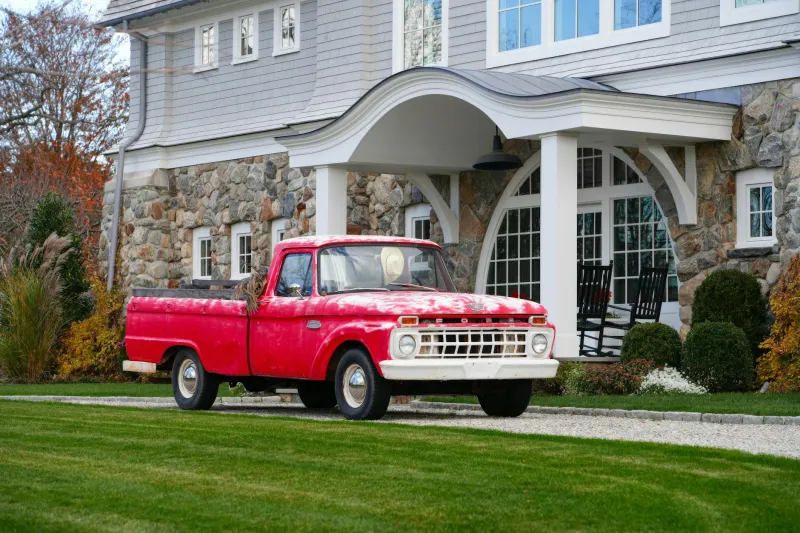
Every Tuesday at 5:47 AM, Frank Kowalski's truck would rumble down Maple Street in Cleveland, Ohio. By the time most families stumbled toward their coffee makers, Frank had already left four glass bottles on the Hendersons' porch (they had teenage boys), two bottles for the elderly Pattersons (who always left him Christmas cookies), and six bottles plus a pound of butter for the Johnsons (Mrs. Johnson was expecting again).
 Photo: Maple Street, via images.squarespace-cdn.com
Frank didn't need an app to track preferences or an algorithm to predict demand. He knew his customers' lives the way a good bartender knows regulars' drinks — through daily observation, seasonal patterns, and the kind of personal attention that can't be automated.
This was America in 1955, when home delivery wasn't a luxury service but the backbone of domestic life.
When Your Front Porch Was America's Loading Dock
The milkman was just the beginning. In post-war America, home delivery created a daily parade of familiar faces who knew your family's rhythms better than most relatives did. The bread man arrived Wednesdays. The ice man came twice weekly in summer. The grocery delivery boy showed up Saturday mornings with boxes packed according to your phone order from Thursday.
These weren't gig workers hustling between apps — they were neighborhood fixtures with routes they'd inherited from retiring colleagues, routes they'd pass down to their sons. The milkman might collect payment monthly, extending credit during tough times because he'd watched your kids grow up. The grocery delivery driver knew which houses needed extra attention during flu season.
Most remarkably, this system operated without GPS tracking, delivery confirmations, or customer ratings. It ran on handshake agreements, handwritten notes left in empty milk bottles, and the kind of social trust that seems quaint today. Your delivery drivers had physical keys to many houses, permission to enter kitchens, and access to refrigerators that modern homeowners wouldn't grant to their closest friends.
The Great Supermarket Takeover
The death of home delivery didn't happen overnight — it was murdered by efficiency. In the 1960s and 70s, supermarket chains promised something revolutionary: everything under one roof, available whenever you wanted it, at prices no small delivery service could match.
American families traded Frank the milkman for fluorescent-lit aisles and shopping carts. They exchanged personal relationships for personal freedom. Why wait for Saturday's grocery delivery when you could drive to the A&P any evening and choose from 47 varieties of breakfast cereal?
Suburban sprawl accelerated the transition. New developments were built around automobile access, not delivery routes. Refrigerators grew larger, allowing families to shop weekly instead of daily. Women entered the workforce in unprecedented numbers, making weekday delivery reception increasingly complicated.
By 1980, home delivery had virtually vanished from American life. The milkman became a nostalgic figure, like the town blacksmith or the telegraph operator — a relic of a simpler time that progress had rendered obsolete.
The Digital Resurrection
Then something strange happened. In the 21st century, Americans began paying premium prices to resurrect the very convenience they'd abandoned decades earlier.
Amazon Prime promised next-day delivery of everything from toilet paper to television sets. Instacart offered grocery delivery within hours. DoorDash would bring restaurant meals to your door faster than Frank ever delivered milk. Subscription boxes started arriving monthly with everything from razors to dog food, curated by algorithms instead of neighborhood knowledge.
The resurrection was remarkable, but something fundamental had changed. Modern delivery optimizes for speed and selection rather than relationship and reliability. Your Amazon driver might deliver packages daily but couldn't tell you the names of your children. The DoorDash courier knows your address but not your story.
What We Lost in Translation
Frank Kowalski knew when the Hendersons went on vacation because they'd leave him a note. He knew Mrs. Patterson was diabetic because she special-ordered low-fat milk. He knew the Johnsons were struggling financially because they'd started ordering every other day instead of daily.
This knowledge wasn't intrusive surveillance — it was community care. When Mr. Henderson had his heart attack, Frank noticed the unchanged milk bottles and alerted the neighbors. When the Patterson's grandson visited from California, Frank automatically doubled their order without being asked.
Modern delivery has eliminated these human connections while amplifying the convenience. Amazon's algorithm can predict what you'll order next week, but it can't tell if you're okay when packages pile up uncollected. Your grocery delivery driver can find your house using GPS, but they can't recognize that you're buying ingredients for a special celebration.
The New Convenience Economy
Today's delivery ecosystem would astound Frank Kowalski. Americans can now order virtually anything and have it appear within hours or days. The selection dwarfs what any neighborhood delivery system could offer. The prices, thanks to massive economies of scale, often beat what small delivery services charged in inflation-adjusted dollars.
Yet we've created something unprecedented: a delivery system that's simultaneously more efficient and more impersonal than anything in human history. We've optimized for metrics that Frank never measured — delivery speed, package tracking, customer ratings — while abandoning the unmeasurable benefits he provided daily.
The modern delivery driver faces pressure Frank never knew. GPS monitoring tracks their every movement. Customer ratings can cost them income. Apps demand efficiency that leaves no time for the neighborly conversations that once defined the job.
When Convenience Came Full Circle
The most ironic twist in this story? Some companies are now trying to recreate the personal touch that the original delivery system provided naturally. Subscription services boast about "getting to know your preferences." Delivery apps promise "personalized recommendations." Amazon's Alexa attempts to anticipate your needs the way Frank anticipated the Hendersons' milk requirements.
But there's a difference between artificial intelligence learning your patterns and a human being caring about your life. Frank's knowledge came from genuine relationship; Alexa's comes from data mining. Frank's recommendations were based on concern for your family; Amazon's are based on maximizing profit.
We've succeeded in bringing delivery back to American life, but we've never quite figured out how to bring back the delivery man who knew your name. In our rush to optimize convenience, we've engineered out the very human connections that once made convenience meaningful.
Frank Kowalski retired in 1978, the last milkman on his route. His truck was replaced by efficiency. His relationships were replaced by algorithms. His keys to customers' homes were replaced by delivery notifications. Progress marched on, but something irreplaceable was left behind on those Cleveland porches, waiting for a delivery that would never come.